Disobedient Bodies in the Dikenga
I dedicate this to my disobedient ancestors: past, present and future.
This workbook is written as a creative interpretation of the Dikenga dia Kongo, also known as the Kongo cosmogram, of the Bakongo people. The Dikenga understands life and consciousness as moving through cycles of birth, growth, maturity, death, and spiritual renewal.
I use this structure to trace the lifecycle of my project, Disobedient Bodies.
Musoni: The conception of the project. It contains the histories and initial research questions from which the project emerged.
Kala: The project’s entry into visible and social life through socio-political context, practice-as-research, and collaborative encounter.
Tukula: The project’s peak maturity, where knowledge develops through sustained exchange with wider collaborators, communities and audiences.
Luvemba: Synthesis, dissolution and rest after the project’s delivery. It considers what has been revealed, what must be released, and what is carried into the next life cycle.
Musoni
The gestational phase, in which my relationship with Odissi unfolds through an expanding field of relations: with water, my Caribbean body, ancestry, teachers, and, eventually, another body.
This is the story of a little girl who almost drowned and learned to fear the ocean.
I remember very little of the incident itself. I do remember tumbling inside a wave, grasping frantically for balance, swallowing warm salt water in desperate mouthfuls, and then, after what seemed like an eternity, being pulled upwards by my uncle. From that moment onwards, the swell of open water terrified me. I often dreamed of tsunamis. I dreamed of tsunamis throughout the final year of my MA.
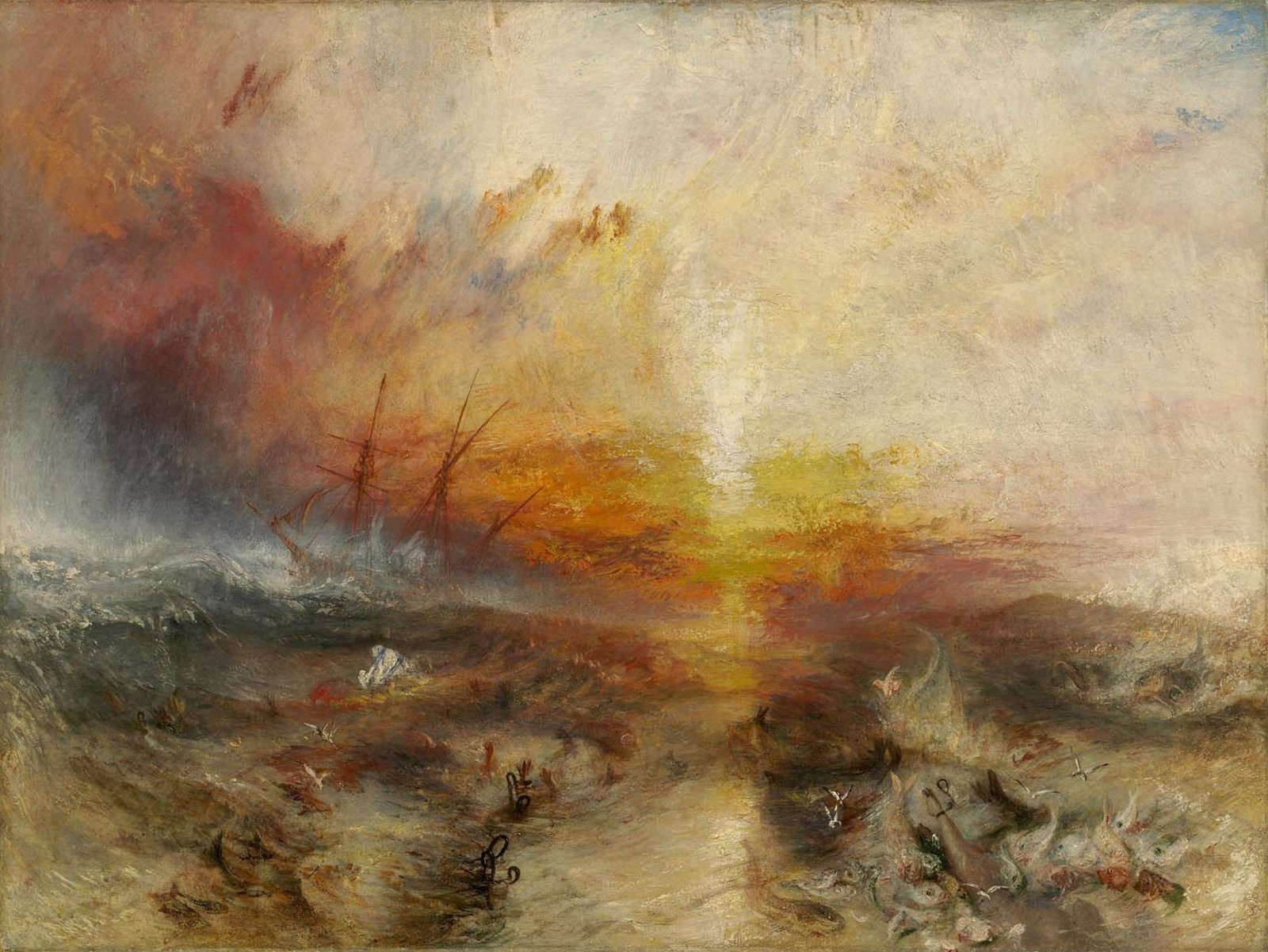
I spent much of my MA journey thinking about how to bring my ancestors along with me. In the process, I found M. Jacqui Alexander’s ancestrally co-written book Pedagogies of Crossing. Or rather, it found me. Alexander writes that “the dead do not like to be forgotten.” Remembering, within her ecology of crossing, is not simply an act of looking backwards but a practice through which relationships with our ancestors are forged (Alexander, 2005, p. 290).
I was attuned to how she invoked water as a bearer of memory, particularly where colonial violence and epistemicide have fractured the written archive. These ideas fundamentally changed how I perceived the ocean that had haunted me throughout my life. The Kalunga line in the BaKongo cosmogram, is understood as a watery threshold between the visible world and the ancestral realm. What interested me about this boundary was that it did not only separate the living from the dead but also made passage and relation between them imaginable (Alexander, 2005, p. 290; Thompson, 1983, pp. 108–109).
For me, the ocean was both a repository of childhood trauma and a way of thinking about larger histories of that crossing. The abyss in Édouard Glissant’s Poetics of Relation, does not preserve history as an intact archive. It also holds rupture, loss and forms of relation produced under violence (Glissant, 1997, pp. 5–8).
For a dougla like me, the Black Atlantic and kala pani carry distinct histories of violence and diasporic transformation. These histories no doubt shape my understanding of self as I move through the world. More profoundly, their non-equivalence inside my body is an interesting contradiction I bear while navigating neocolonial racial division, anti-Blackness, respectability and unequal claims to cultural legitimacy in my country (Gilroy, 1993; Bahadur, 2013; Pirbhai, 2009).
I began to wonder how the relations I imagined in watery sea graves coursed through my body. In a way, I was reimagining Glissant’s archipelago as an embodied, speculative world in which multiple ancestral histories might encounter, misunderstand, and transform one another (Glissant, 1997).
This orientation was partly inspired by the Afrofuturist mythology of Drexciya, which imagines an underwater civilization descended from the unborn children of pregnant African women thrown overboard during the Middle Passage. Drexciya, in its refusal of realism, offered me a way of imagining relation inside a fractured archive.
How do the ancestral worlds I carry encounter one another within my body?
Alongside this question, I was asking what happens when a codified form like Odissi is danced by a Caribbean body that exceeds its epistemology. It is important to note here that Odissi has given me an extraordinary discipline and a way of sensing the world, but as an Afro-Indo-Caribbean woman, I found that it cannot fully account for everything my body knows.
These questions travelled with me into my placement with Kathak scholar, Parul Shah. Her ability to bridge phenomenological inquiry with Kathak made me eager to explore what might become possible when my ancestral lineages and Odissi were given the space to meet.
In our first session, Parul encouraged me to see my body as an active site of ancestrality moving with me. This was new to me; I had never been invited to think in this way in my Odissi classes. Her facilitative method ushered me from analyzing the politics of Odissi towards actively testing how those politics were made visible in my movement.
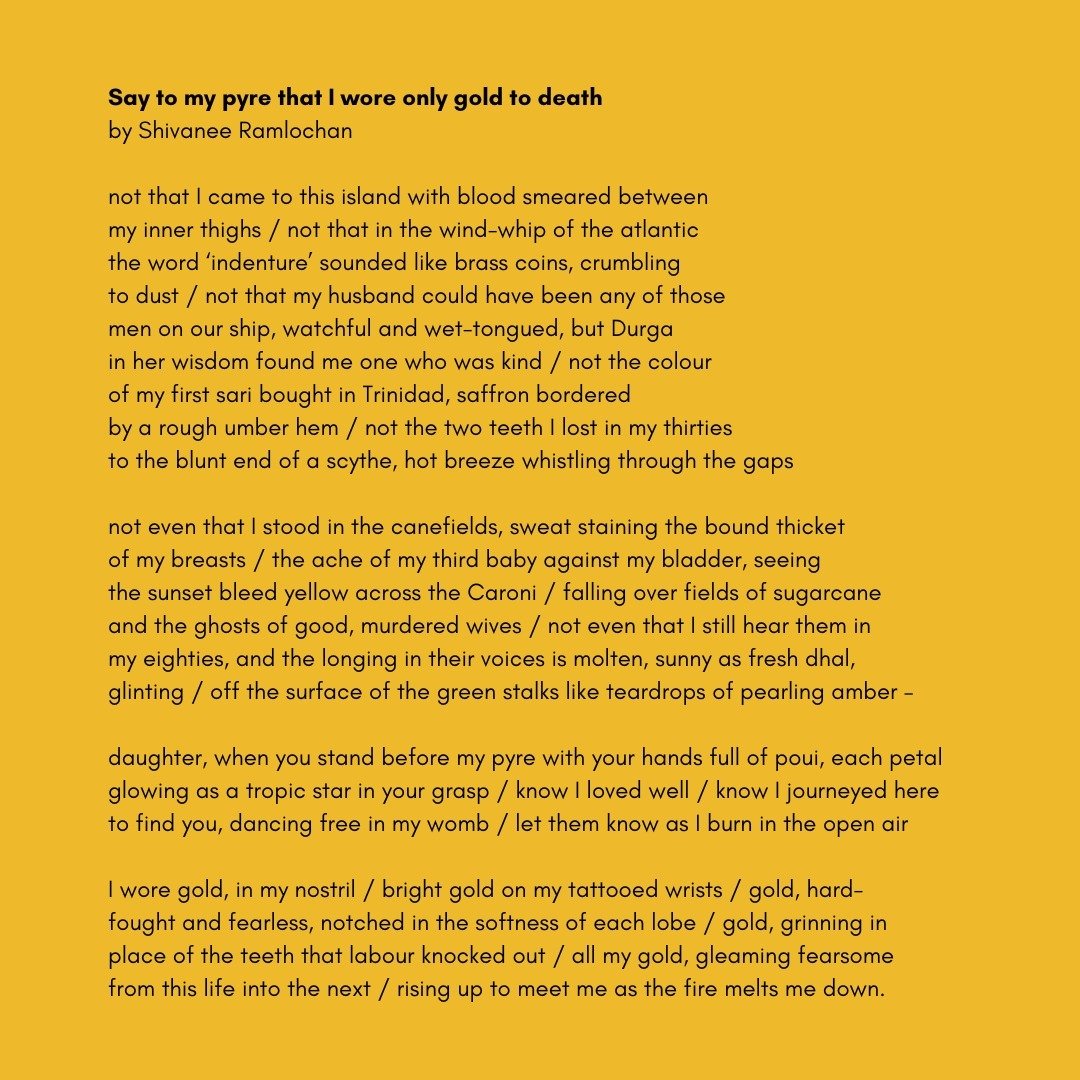
While dancing to a poem by Shivanee Ramlochan, I allowed myself to curve, soften and contort beyond the sculptural clarity I had learned to protect (Ramlochan, 2024). It was a momentous encounter with my body that I had rarely trusted enough to follow. However, in Parul’s studio, improvisation did not mean abandoning form. Rather, it created the conditions in which I could notice how deeply discipline had organized my body.
The experience made me think of an earlier moment during my residency with Mandeep Raikhy (Raikhy, 2024). As I watched my peers effortlessly soften, contort and sink into the folds of their musculature, my own body stalled. I remember thinking: How do people move freely like that?
I know I could access other forms of embodied liberty in different spaces, for example in a local party or other social gathering. What unsettled me was encountering these qualities within a studio I perceived movement as pedagogy and research. My body knew how to organize itself through technical clarity; it was less accustomed to trusting spontaneous sensation as a legitimate form of knowledge within a ‘formal’ dance context.
Mandeep made this insight visible. Dana Yahalomi and André Lepecki later gave me a political language through which to understand it. Dance training does not only produce technical capacity. It also installs systems of value that determine which sensations are trusted and which impulses are treated as disobedient (Yahalomi, 2024; Lepecki, 2013).
I do not understand this as evidence that Odissi is inherently without softness, sensuality or improvisatory possibility. I am speaking more specifically about the personal, pedagogical relationship to Odissi that my body had absorbed over time: what it taught me to prioritize and recognize as legitimate movement. This newfound understanding made me shift from asking how Caribbean movement might be added to Odissi towards asking how different embodied histories become available under different conditions of practice, and how my body might already hold multiple movement possibilities that training, context and relation either reveal or constrain.
If the dead do not like to be forgotten, what happens when we begin remembering them? (Alexander, 2005, p. 290)
We feel rage and grief. We dream. We exhaust feeling. We cry. We dance. We fold into our arms and cry again. These were not the experiences I had expected to examine through research and theory.
It is indeed a strange thing for ancestral work to become part of a research process. I was very anxious about how to make critically responsible work without leaving the spiritual wisdom of my ancestors behind.
Unsure whether to dismiss these experiences or accept them uncritically, I sought advice from my teacher, Dr. Funmi Adewole (Adewole, 2025). She encouraged me to treat them as methodological problems and directed me towards Jarvis C. McInnis’s reading of Erna Brodber’s Louisiana. McInnis helped me recognize that the fragmented histories of Black diasporic life may require methods that exceed the written archive and Western standards of rational evidence. Drawing on Alexander’s concept of sacred praxis, he considers sound, intuition, spirituality, communal memory and ancestral encounter as possible modes of knowledge without treating them as transparent historical proof. My task therefore, was not to prove ancestral memory nor make essentialist claims. It was to become more precise about the conditions under which sensations, affects and movement tendencies emerged. I had learned to distinguish what I felt from how I interpreted it, and both from what I could responsibly claim through scholarship (Alexander, 2005; McInnis, 2022).
As I continued my explorations I began to reach the limits of solo practice. I was the only body in the studio and the primary author of the conditions through which the practice unfolded. I could investigate how repetition, sensation, imagination and memory affected my experience of Odissi, but I could not yet test how technique might respond when another person’s movement logic entered the field. I needed to move from examining how I inhabited Odissi towards examining what happens when another body can transform that relationship.
Dr. Funmi Adewole’s social dancing score offered a practical way of thinking through this transition (Adewole, 2025). In the score, movement passes between people. Each person changes the dance while carrying traces of what came before. Continuity is thus produced through ongoing transformation, not exact preservation.
I began asking what might happen if the negotiations I had been studying within my own body entered sustained relation with another person. What would remain recognizable? What might be impossible? What could change through co-authorship? Could two practices meet without being collapsed into sameness, or organized through a hierarchy in which Odissi remained central?
What happens when Odissi comes into relation with Caribbean bodies, memories and embodied traditions, and what political and poetic languages might emerge through that crossing?
Kala
The relational phase, in which the questions carried in my body enter dialogue with socio-political life and another embodied tradition, revealing how movement reorients through sustained relationality.
In their rejection of Carnival as a national festival, Indian nationalists refer to this vulgarity and wanton display of sexuality which they argue is incompatible with the Indian or Hindu way of life…Indian women who participated in Carnival until recently were seen as putting a stain on their sacred womanhood. The debauchery of this festival is seen as another example of the decadence and low moral standards of creole society and the African population.
— Rhoda Reddock, 1998.
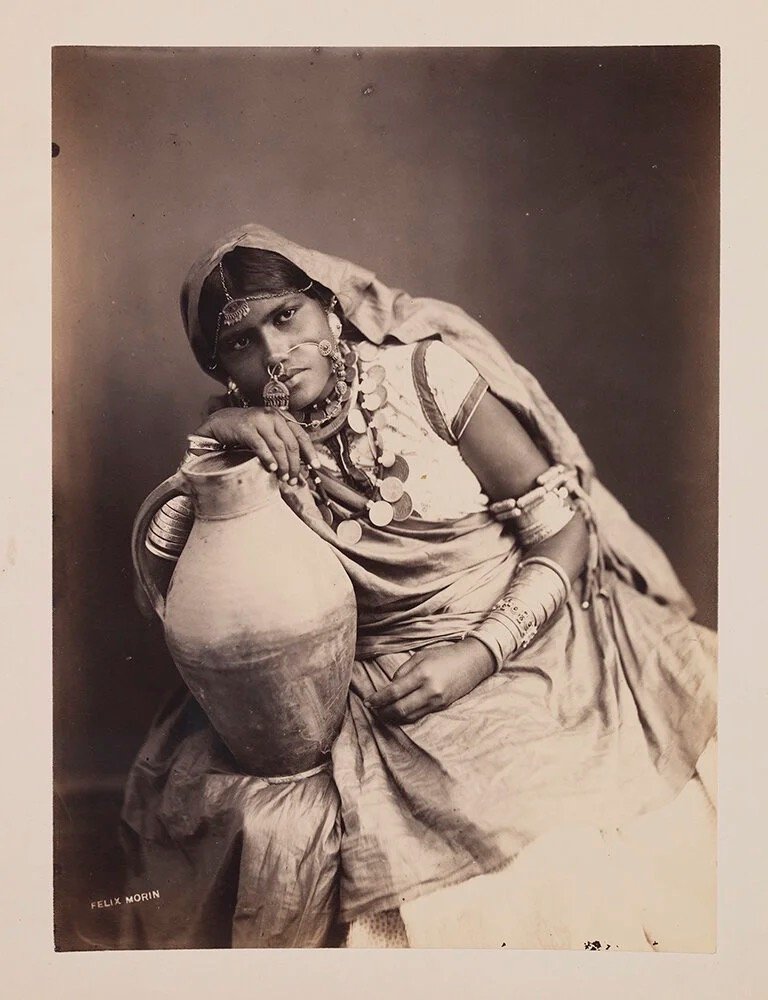
Dr. Gabrielle Hosein argues that respectable Indo-Trinidadian femininity was partly produced through its imagined distinction from the perceived sexually autonomous Afro-Trinidadian woman (Hosein, 2012, pp. 3–5). Yet the repertoires carried across the kala pani by indentured women complicate this opposition. These were not the classical dances later institutionalized in Trinidad, but social dances in which sensuality and sexually expressive movement were already present in their bodies. It feels important to note that these dances were not automatically liberatory. Many were shaped by patriarchal expectations of domesticity. But, they do indicate that pleasure and sensuality were never foreign to Indo-Caribbean women’s cultural worlds.
The introduction of Indian classical dance to Trinidad through cultural exchanges can be traced to 1977, after which it became associated with reputable activity for girls from respectable homes (Bergman, 2008, pp. 17–19). Priya Srinivasan lends weight to this dynamic as she argues Indian classical dance transmits more than technique, producing feminized ideals, discipline, and cultural citizenship (Srinivasan, 2011). In Trinidad, its distance from Afro-Caribbeanness was therefore social as well as kinaesthetic. Classical training became aligned with Indian and Hindu cultural preservation and class respectability while Carnival was frequently racialized as an Afro-Creole social world of moral risk. Avoiding Carnival could consequently operate as a form of communal boundary-making: a way of protecting Indian identity from creolization and preserving respectability through distance from Black cultural life.
My conundrum was that I did not know how possible it was to separate my Indian identity from my Blackness when, in fact, both were constitutive of who I was. And after almost ten years of being in Odissi classrooms with a body that carried histories of excess I did not yet know how to bring with me, I became increasingly interested in what might happen when my kinaesthetic languages that had been positioned as separate were allowed to meet one another.
As I began to think more carefully about the different inheritances I was in limbo with, I was drawn to the movement principles they might have in common. Leda Maria Martins articulates Afro-diasporic performance as a living cosmology in which ancestral relations are activated in the body than preserved as a fixed past (Martins, 2021). This understanding finds expression in Afro-Caribbean dances such as wining, where circularity folds ancestral memory into the present (Thompson, 1983; Daniel, 2005). My Indo-Caribbean ancestors also embodied the sensual hip.
My thinking around how these inheritances might meet Odissi deepened further when I considered the ritual, erotic and full-bodied dimensions associated with the Maharis were selectively sanitized through classicization, producing an Odissi that could be presented as respectable (Gaston, 1996; Soneji, 2012). The question, therefore, was not whether sensuality existed in Odissi, but which sensualities were allowed.
The Jamette is a colonial archetype of an Afro-Creole woman whose public dancing and sexuality were marked as vulgar and excessive. A critical figure in Trinbagonian consciousness, she exposes how colonial respectability was produced through racialized oppression of the Black female body. Juxtaposed with Indo-Caribbean femininity and the reconstructed figure of the Odissi dancer, she reveals different but connected demands placed upon women’s bodies. The Afro-Trinibagonian woman could be represented as sexually excessive and available, while the Indo-Trinbagonian woman was expected to embody restraint and purity. Similarly, the modern Odissi dancer emerged through ideals of spiritual refinement, obedience and respectable femininity that transformed the visibility of sensuality within classical performance. None of these positions granted women uncomplicated authority over how their bodies could appear.
- Local Bollywood dance, 1992, featuring the creolized thumka (hip) of Ramnarine “Molly” Bridgelalsingh, one of my earliest dance teachers. Credit: Mastana Bahahar
- Basongye dance from the central Democratic Republic of the Congo, showing the circular hip movements carried to Trinidad and Tobago and sustained in wining. Credit: YouTube @Me_lissaf3
- Activating the thumka in Odissi practice with Adrian.
If a Mahari dancer had crossed the kala pani, how might her dance have become creolized?
“Yuh cyah play mas if yuh ’fraid powder.”
— a Trinbagonian proverb.
In mas, powder is part of entering the masquerade: to play the mas is to accept being marked and changed by it. The proverb is an ethical anchor in this project. I could not enter another community’s world, take what was useful for my own making, and expect to remain unchanged. Echoing this, Ruth Behar’s The Vulnerable Observer challenges the fantasy of the neutral researcher, arguing that meaningful inquiry requires the observer to recognize how their own vulnerability, position and relationships shape what can be known (Behar, 1996).
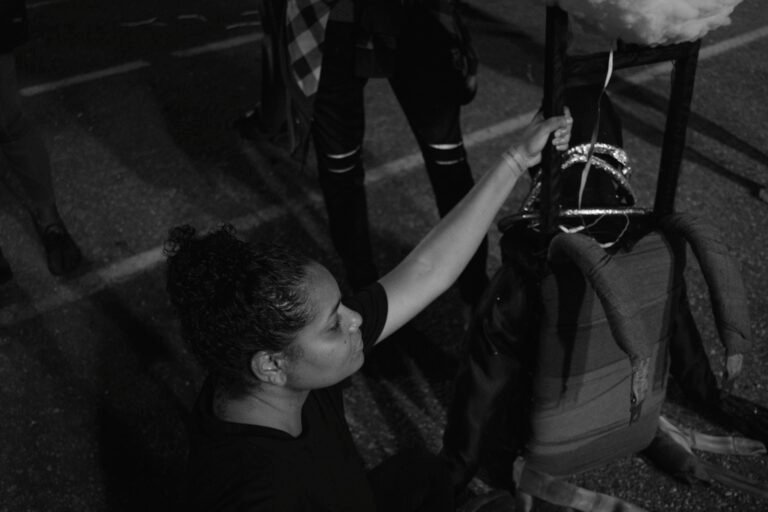
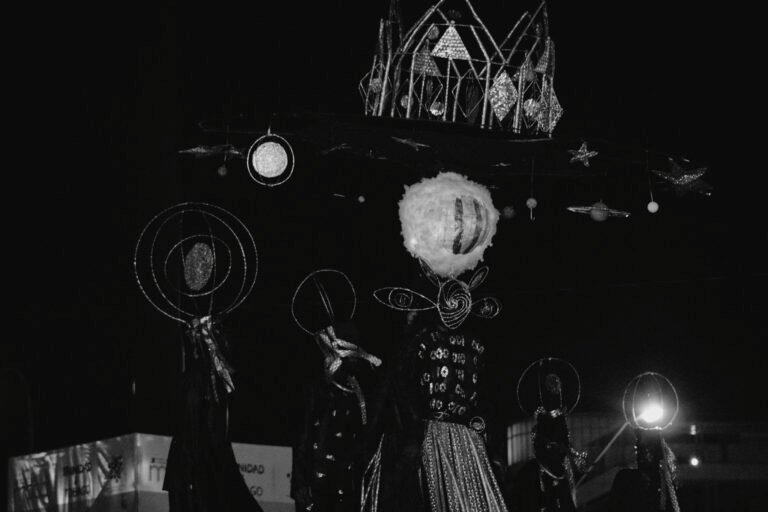
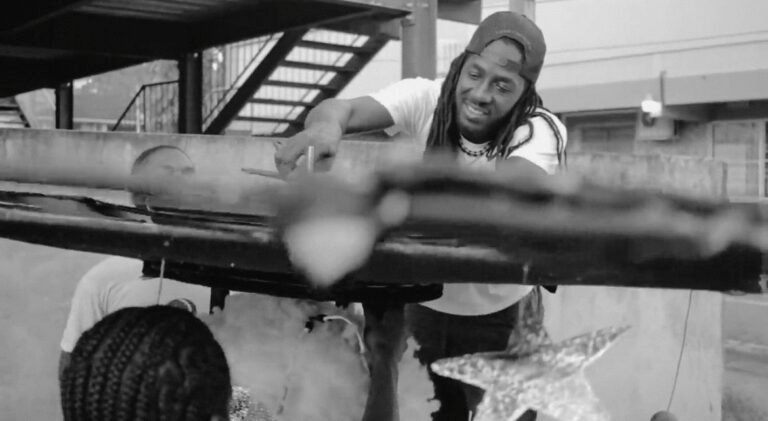
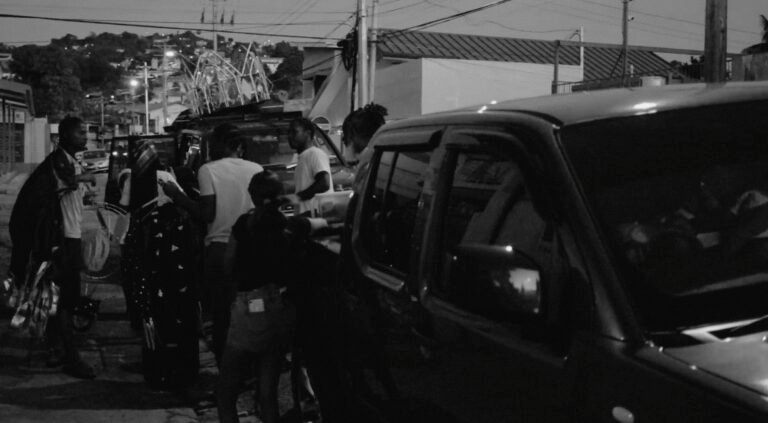
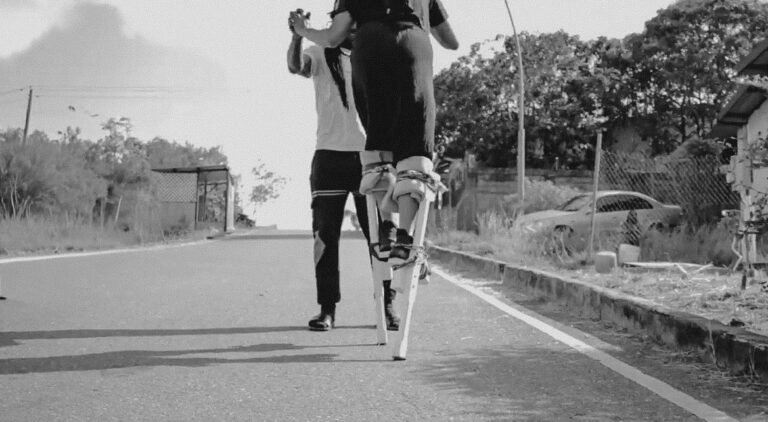
I spent time with several Moko Jumbie groups between October 2025 and June 2026, trying to understand their world. My most sustained relationship was with Adrian Young, his family—and, by extension, the Future Jumbies—with whom I worked closely through the months leading into Carnival and throughout the season itself. At first, our sessions started with me reaching for my notebook and camera, but I quickly learned that time spent in another person’s world slowly changes the distance from which you can look.
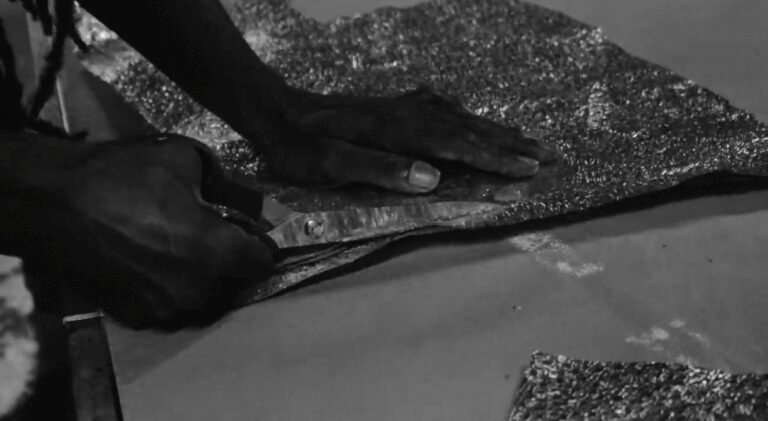
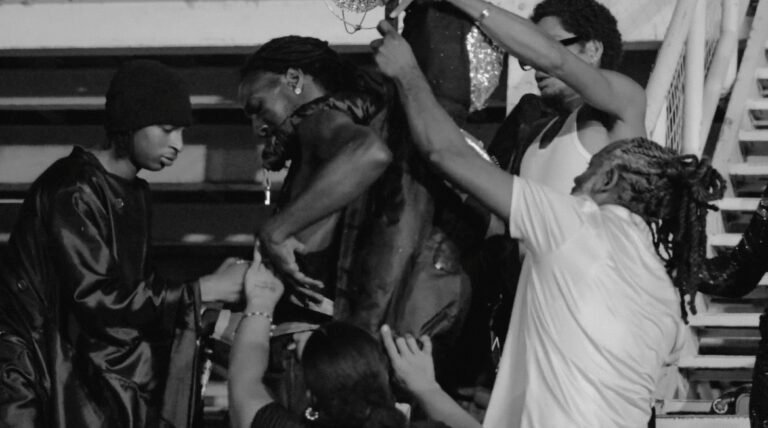
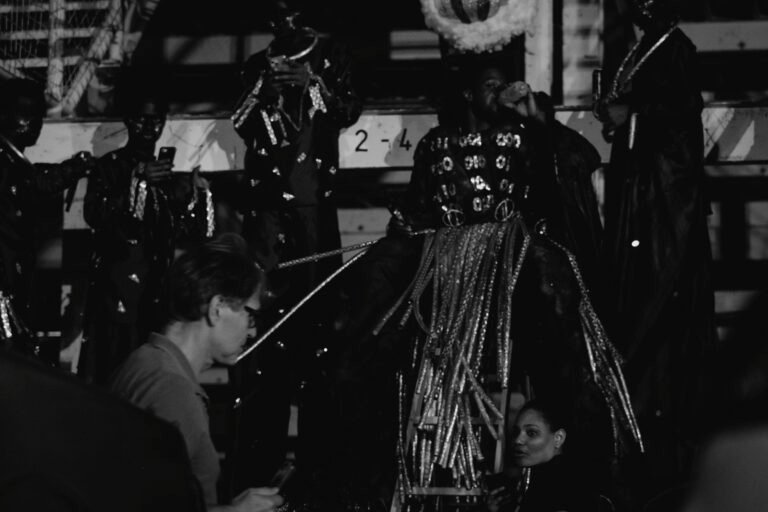
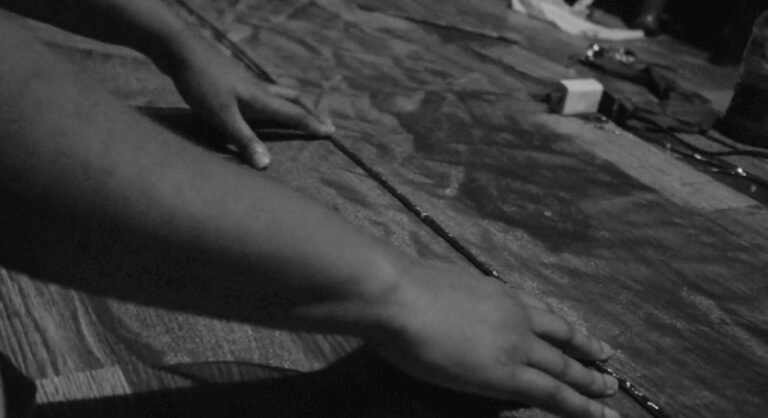
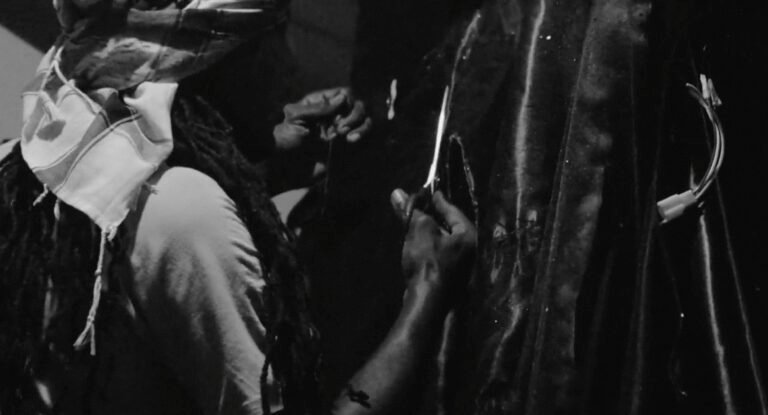
Stick life eventually became a daily ritual made possible through the sharing of labor—by my own stained hands. Having named this, I can see that this project came to life through the slow building of trust and intimacy. Made possible by the logistical, physical and emotional work of mas-making, and through the delays, risks, disappointments, friction, and collective problem-solving that were invisible once Adrian mounted his stilts in a magnificent costume.
Long before our practice-as-research process, Adrian Young taught me that community is not only sustained by harmony, but by the willingness to push through discomfort, and continue building something together. By the time we entered the studio, co-creation no longer meant inviting him into a structure I had envisioned, since our relationship had already changed what the work could become.
Politics of the Dance Studio
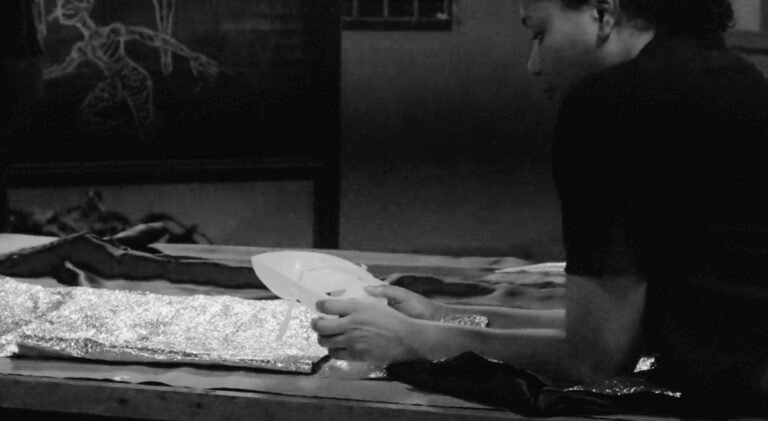
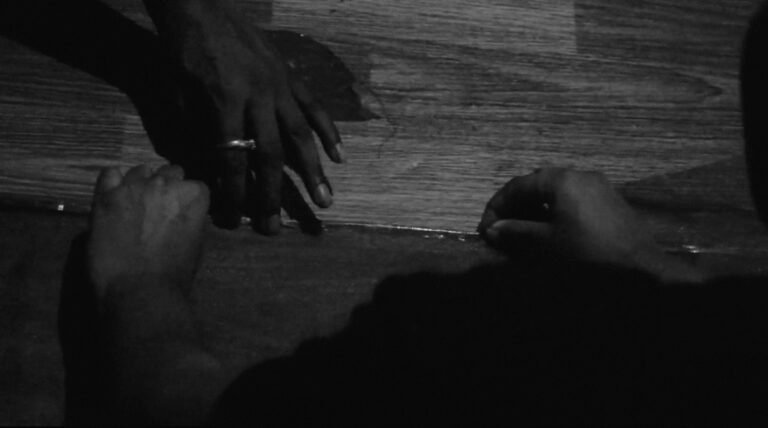
An Odissi dancer and a Moko Jumbie were trying to find a dance together, and in the process, discover what this could reveal about the labour of relation.
At the heart of the research was the generative friction between Odissi shaped through strict adherence to technique and hierarchical pedagogy, and Moko Jumbie performance, which often emerge through intuition and responsiveness. Our bodies were attempting to negotiate these political logics at once and that tension was the intellectual engine of the project.
Working together was also a testing ground to understand what liberatory pedagogy might feel like in practice. Moving away from a structure that positioned me as the teacher and him as executor, we worked through conversation, curiosity, and play allowing the methodology and knowledge to arise dynamically. Asking, “How does that feel in your body?”, moved us away from technical correction and towards embodied responsiveness without requiring either of us to replicate the other’s technique. This was the pedagogical relationship I had longed for in my own Odissi training.
Mervin Chisholm’s Caribbean Emancipatory Pedagogy was instrumental in my understanding of redistribution of pedagogical authority: away from one-directional transmission and towards dialogue, participation and the creation of power with others (Chisholm, 2021). This became visible when Adrian’s needs on stilts uncomfortably reshaped my pacing and when my desires made boundaries part of the choreography itself. Our collective knowledge therefore continually altered the conditions through which the work could exist.
I am nevertheless cautious about naming the process absolutely emancipatory. Alexandra Kolb warns that collaboration is not automatically democratic, since authorship, institutional power and visibility remain unevenly distributed (Kolb, 2011). I did initiate the research and remained responsible for much of its framing and distribution. The political value of the process therefore did not lie in achieving equality, but in keeping authority open to negotiation. In the dance of this facilitative process, emancipatory pedagogy was tested by whether Adrian’s body could speak back and not simply listen within a structure I had designed.
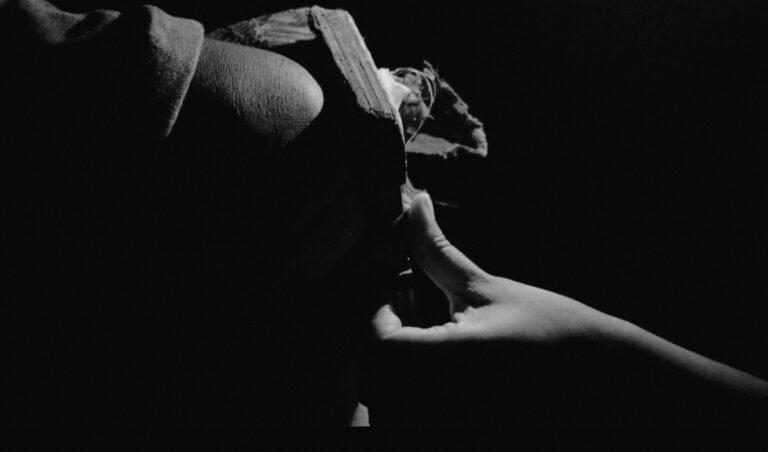
A dance that explores Afro–Indo relational politics. Set within a speculative plantation landscape, it follows two figures as they search for connection across unfamiliar movement worlds.
How Do You Choreograph What Is Unknown?
First, you begin with what you do know, even among the fractures that surround it. Adapting Saidiya Hartman’s critical fabulation, embodied speculation in our choreography manifested as several relational possibilities where historical certainty was unavailable to us (Hartman, 2008).
Then, you resist completing the story, as ethical speculation requires you to distinguish evidence from invention and acknowledge the limits of what can be repaired. In this vein, Hartman asks us to remain accountable to archival limits, while Christina Sharpe’s wake work demands care in how the ongoing afterlives of slavery are represented (Hartman, 2008; Sharpe, 2016).
In this way, we were not choreographing history but asking what surviving traces evoked in our present bodies. And Mandeep Raikhy’s Hallucinations of an Artifact (Raikhy, 2023) offered a useful case study. Rather than producing replicas of the Mohenjo-daro figurine, its performers create distinct embodied afterlives that remain in relation without becoming identical (Gupta, 2024; Yadav and Chakrabarti, 2024). Similarly, Adrian and I were asking how we might dance together without collapsing into fusion or exact synchrony (retaining our bodily and cultural differences).
This was one situated way of investigating Indian–African relational politics through embodied practice. Undeniably, such politics are not objectifiable; rather, in this project, they become perceptible like the weather: visible through their effects. In our sessions, they appeared through who felt safe, uncomfortable, misunderstood or capable. The politics were therefore not separate from the dance but present within the conditions of relation itself.
DOUGLA
On The Politics of Filmmaking
The conceptualization of this film grew from my interest in how filmmaking might work as an extended performance-as-research method, where the relational dynamics in our choreography could become more deliberately legible. Our process was question-led and iterative with cinematic choices recurrently examined for how they distributed power and interpretation, and then reworked in dialogue among production collaborators. Trinh T. Minh-ha’s concept of “speaking nearby”, rather than claiming to speak about or for another, offered an ethical orientation for resisting representational mastery while preserving opacity (Chen, 1992).
Turning to Black film scholarship, Michael Boyce Gillespie’s Film Blackness: American Cinema and the Idea of Black Film is important precisely because it is less an attempt to define “Black film” than an argument for changing how Black film is read. Gillespie carefully clarifies this distinction between cinematic inquiry and social transcription: the political work of the film lies not only in whom or what it depicts, but in how cinematic form stages history, difference and becoming as unresolved questions (Gillespie, 2016).
Dancing within the productive tension Gillespie opens between artistic prerogative and representational prescription, I found his refusal of the expectation that Black film provide socially correct, comprehensive or affirmative representations of Black life valuable. Yet his claim that “Black film must be understood as art, not prescription” did not, by itself, resolve the ethics of a community-embedded filmmaking process such as this one. In this project, freedom from representational fidelity could not become an alibi for freedom from relational responsibility. The methodology therefore needed to hold two propositions in tension: the film was not required to stand in for an entire community, faithfully reproduce a collective lifeworld or resolve the political conditions it invoked; yet it remained accountable to the particular collaborators, practices, images, histories and relationships through which its speculative world was made (Gillespie, 2016, pp. 2–11).
The following table illustrates how this approach informed the film’s decisions.
TUKULA
The blossoming phase, in which the research enters peak maturity in community through sharing, participation and the widening of interpretation and authorship.
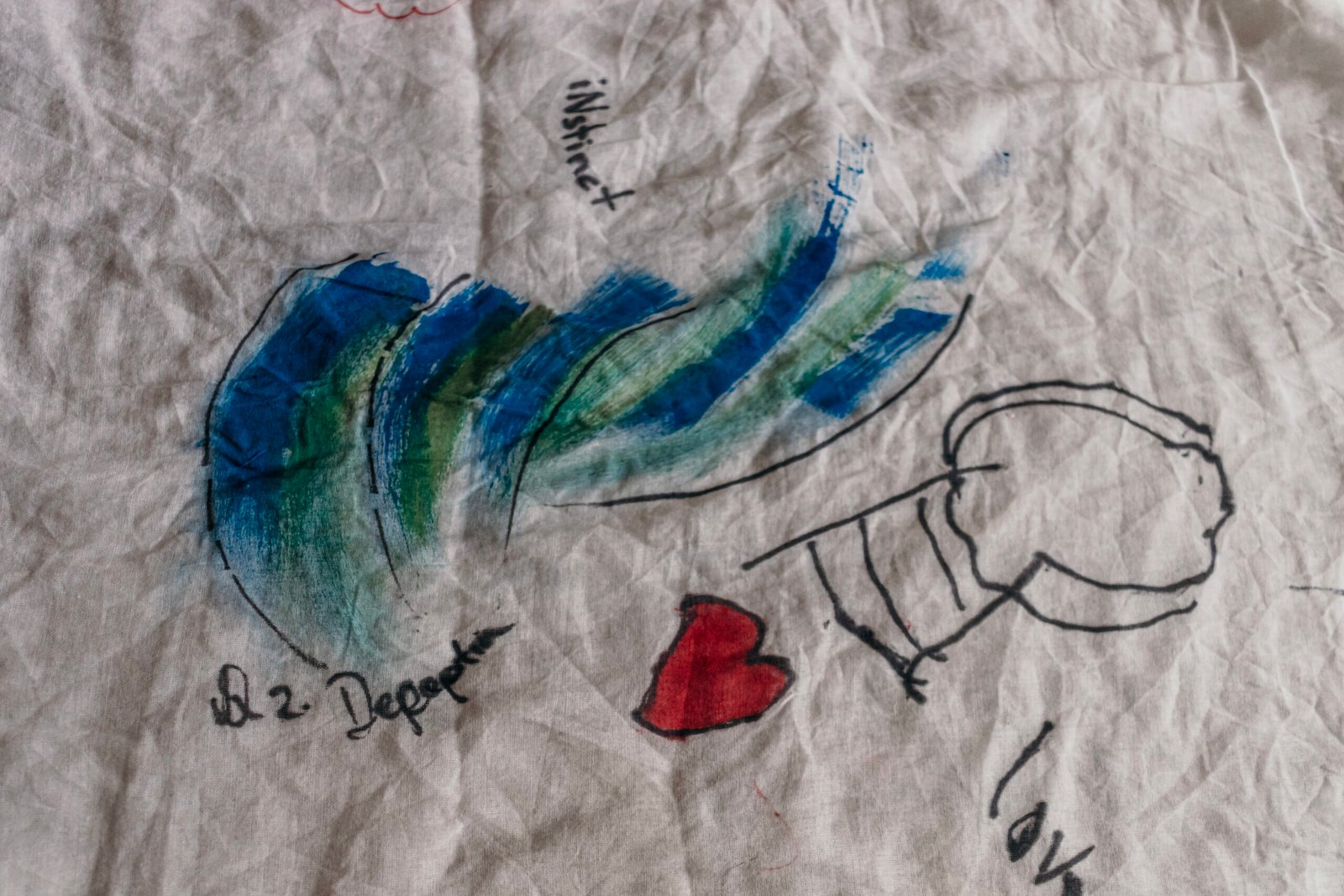
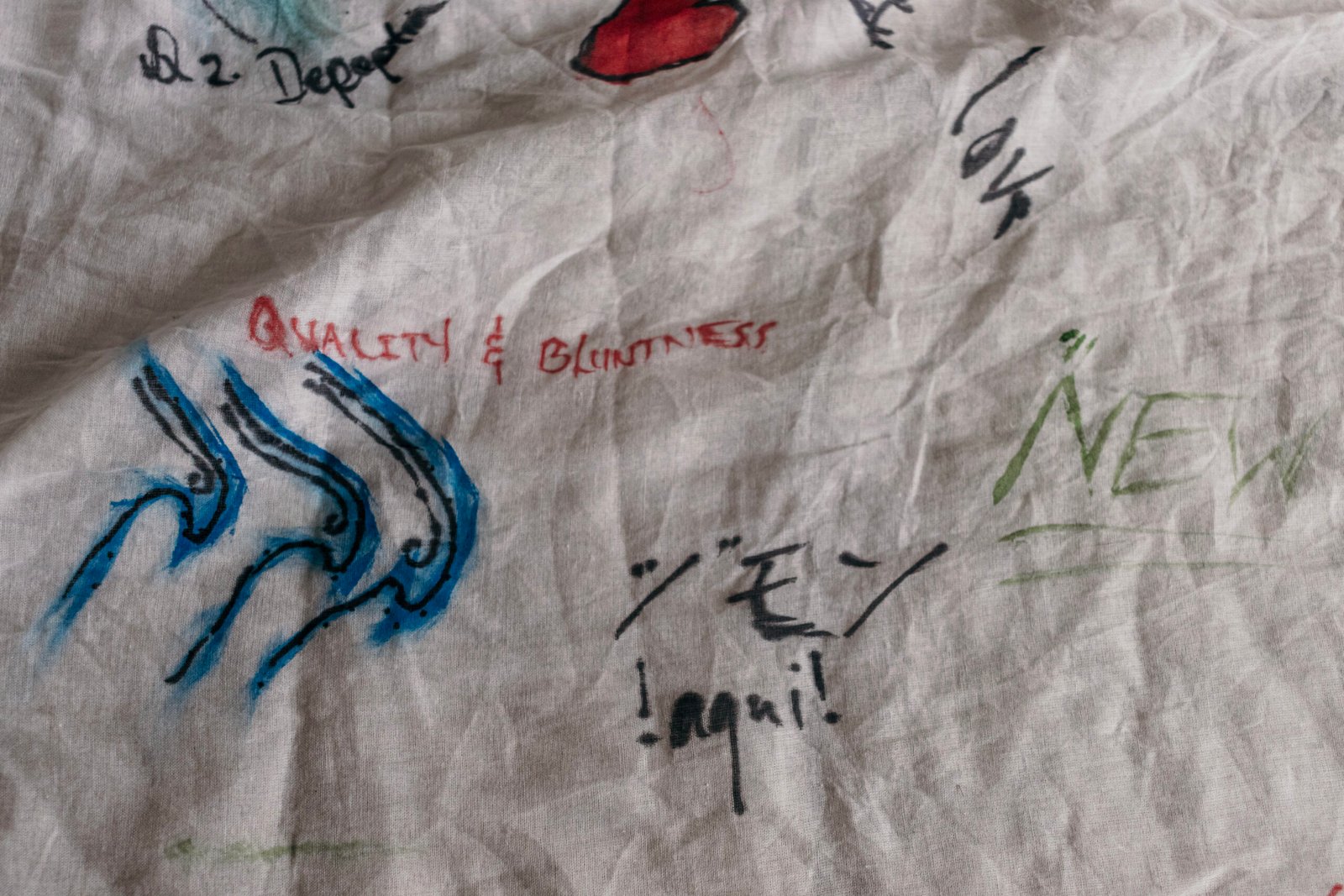
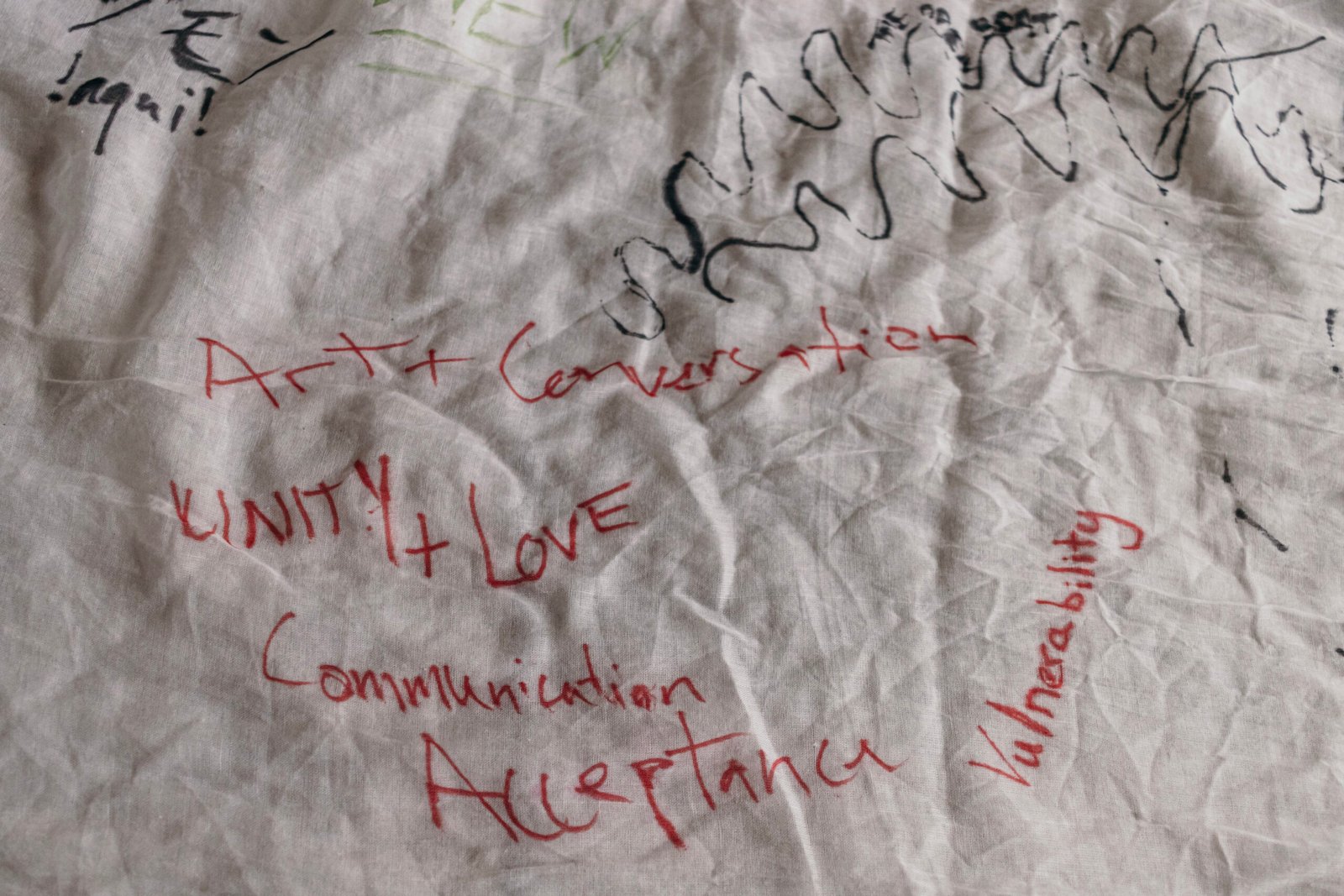
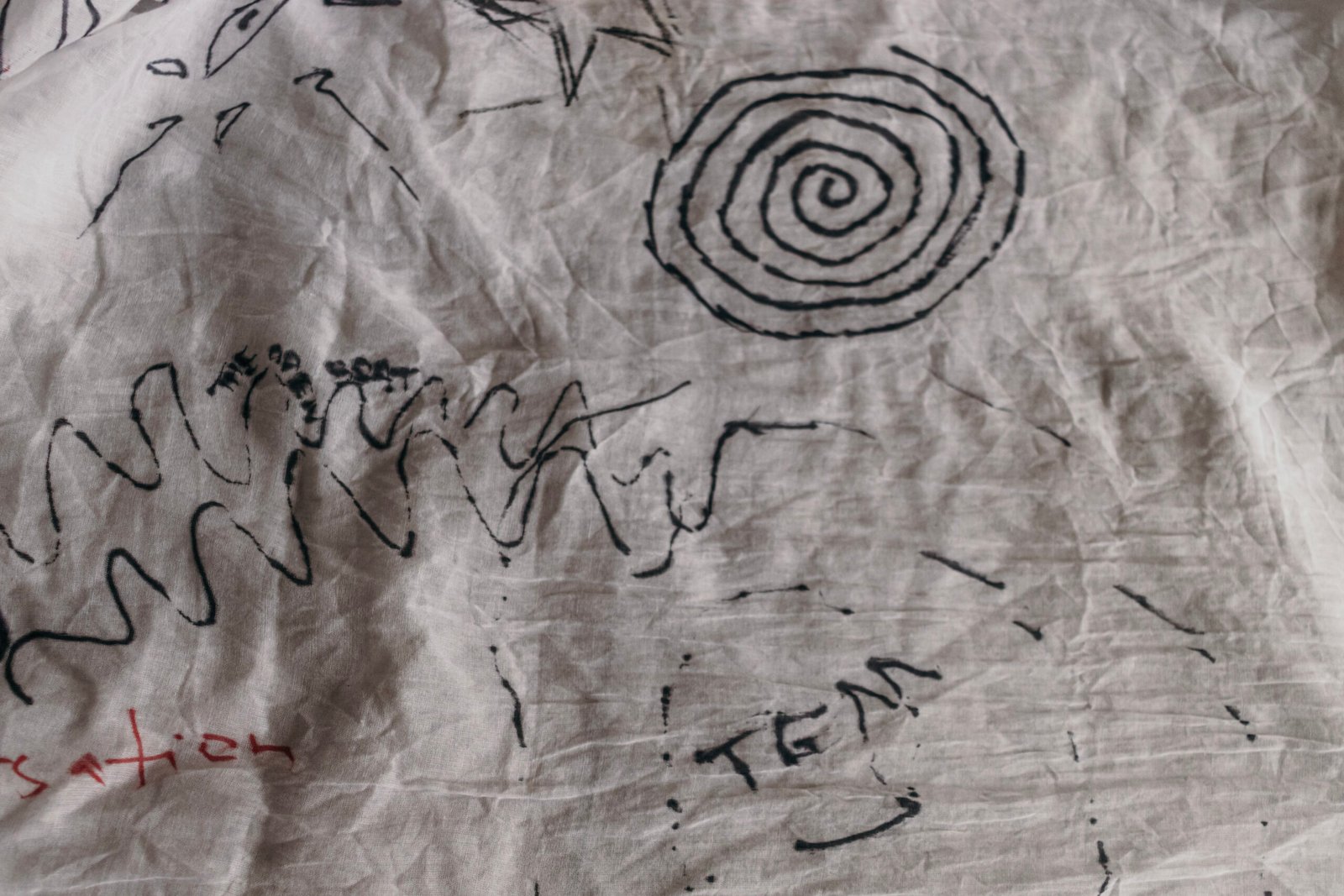
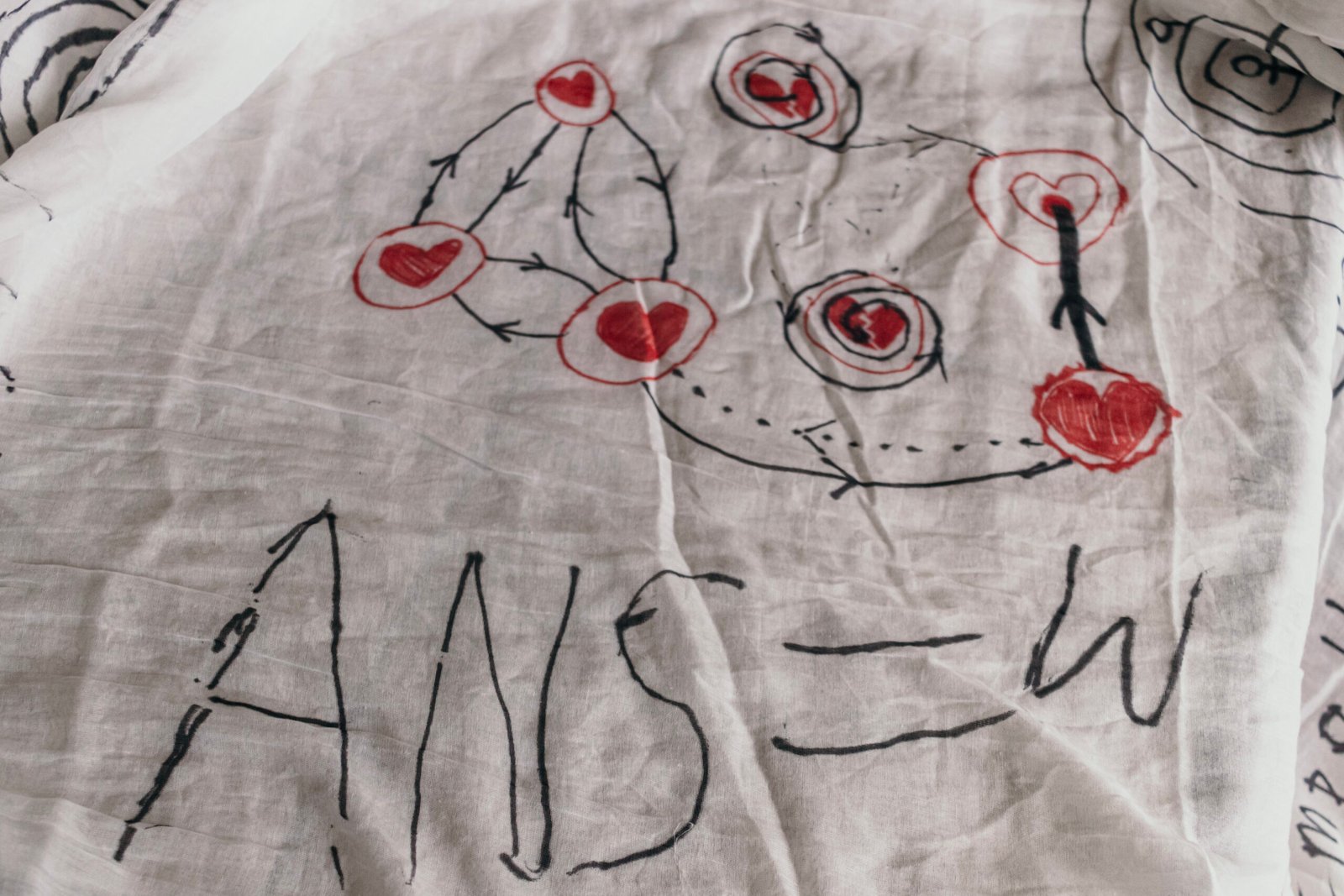
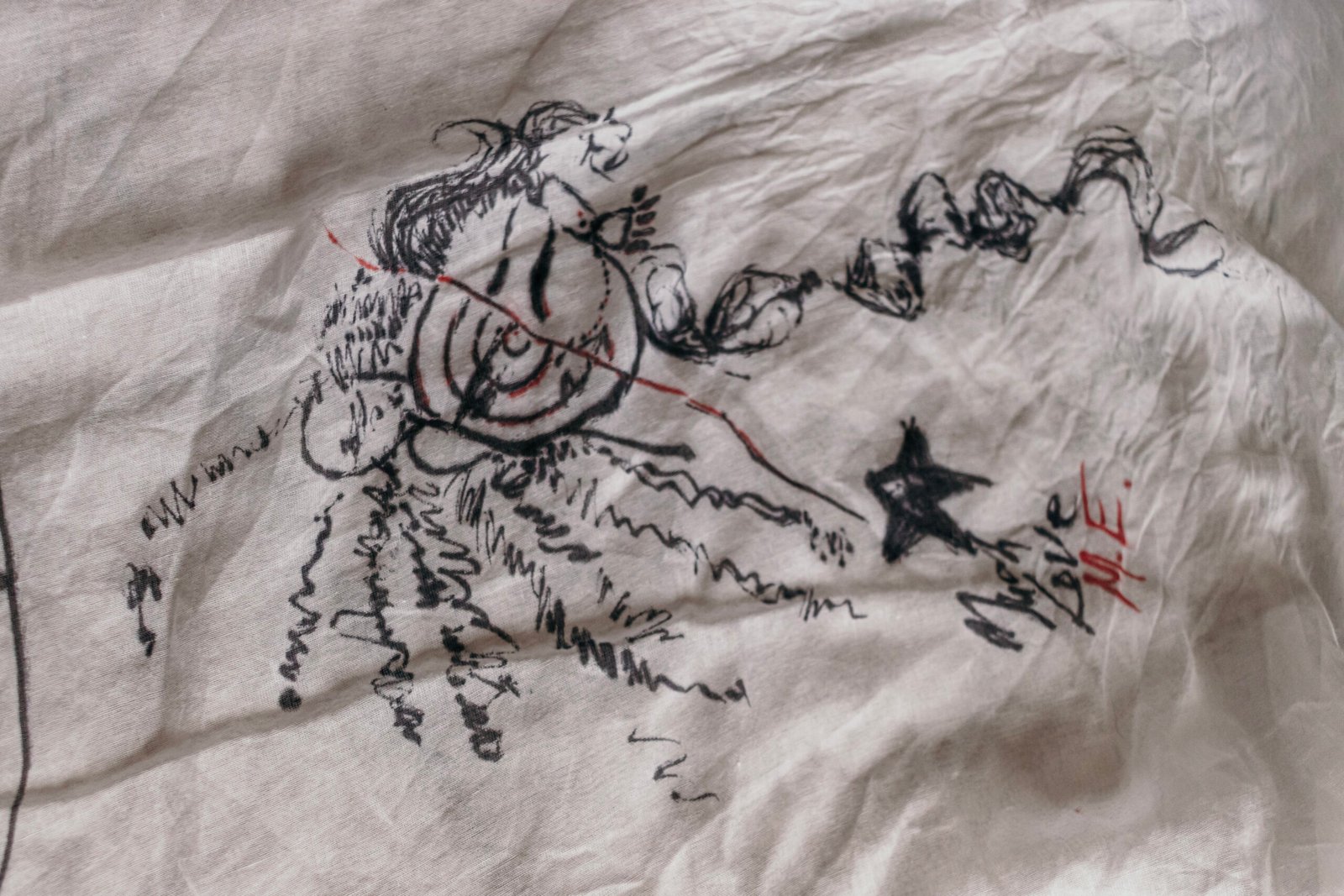
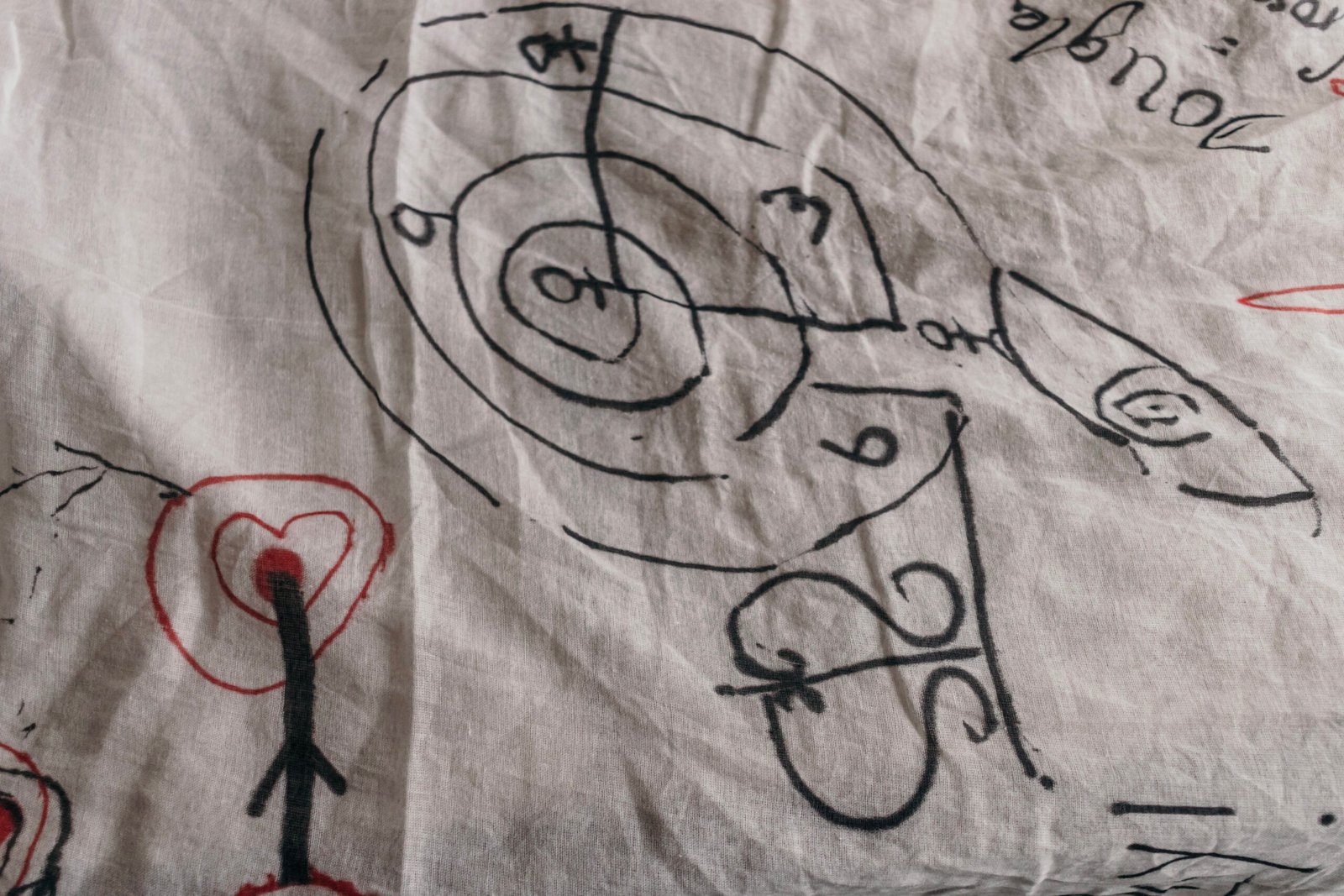
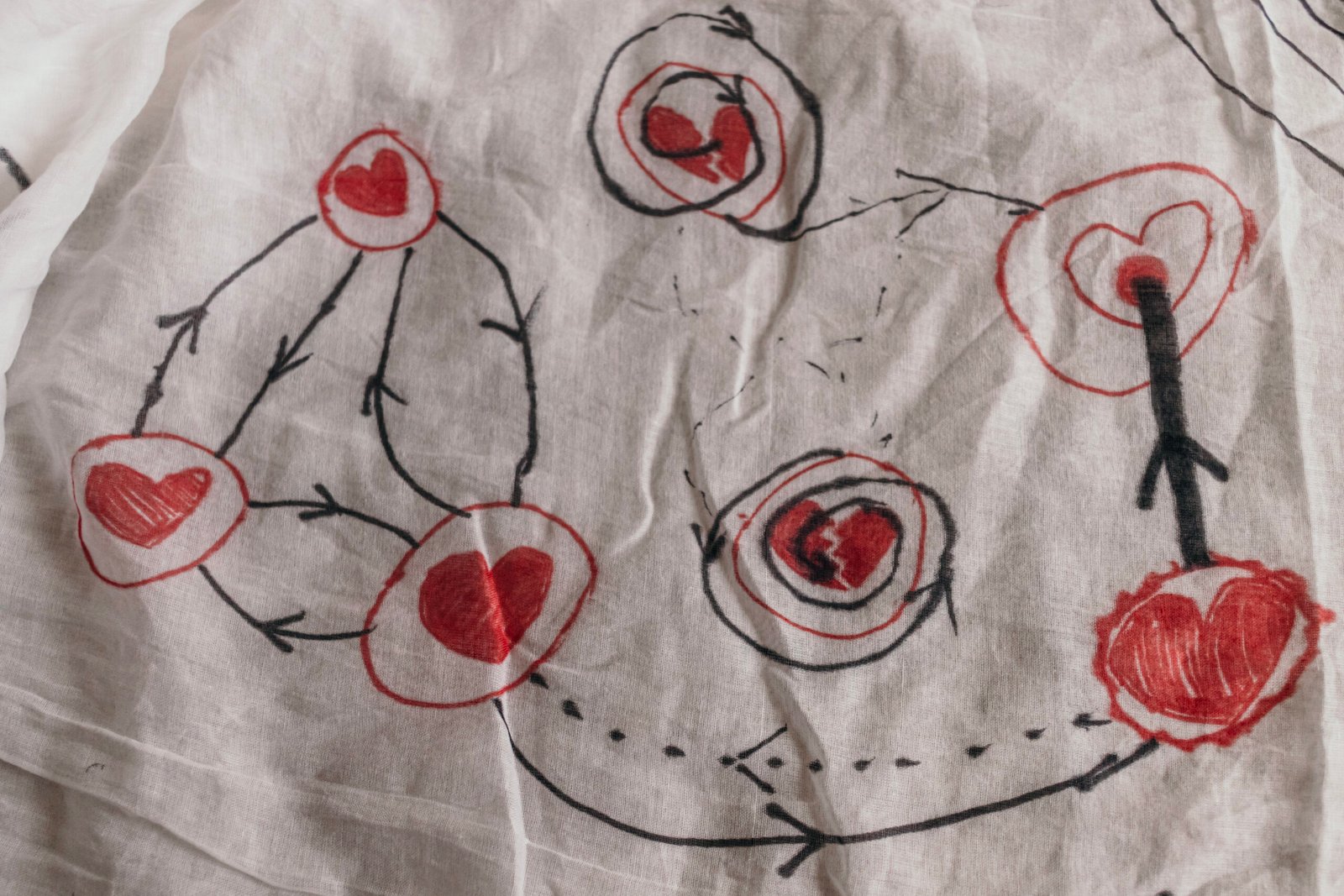
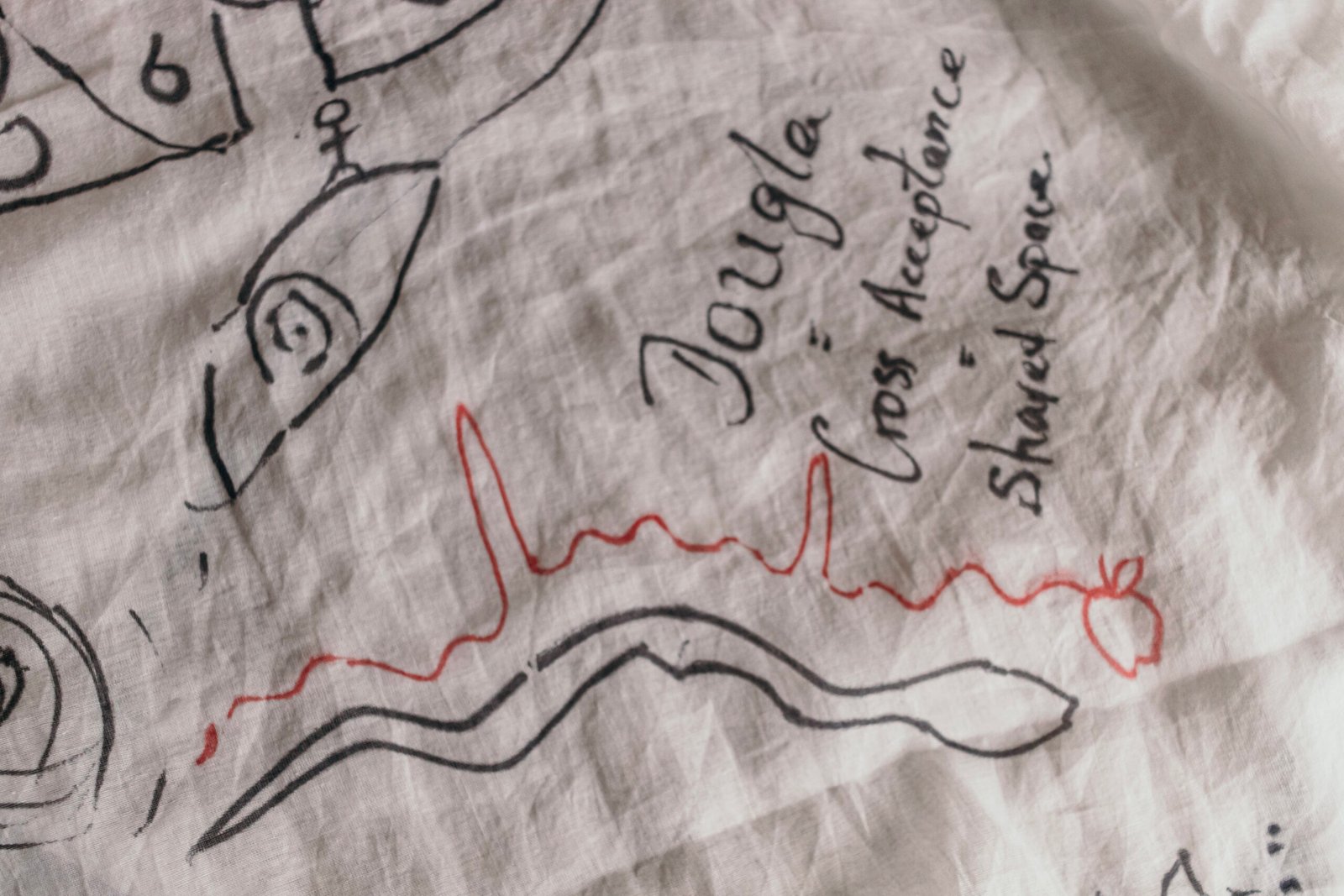
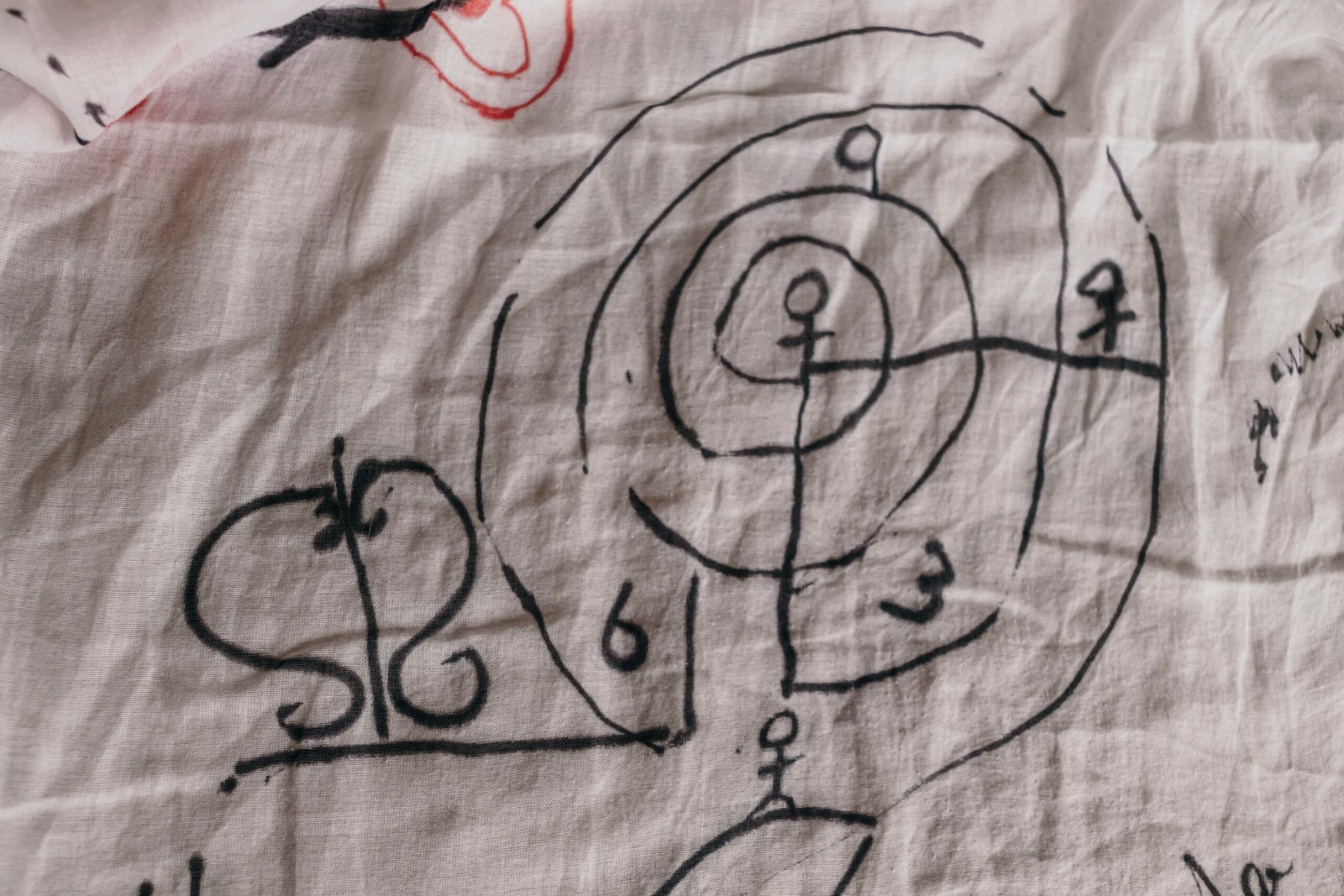
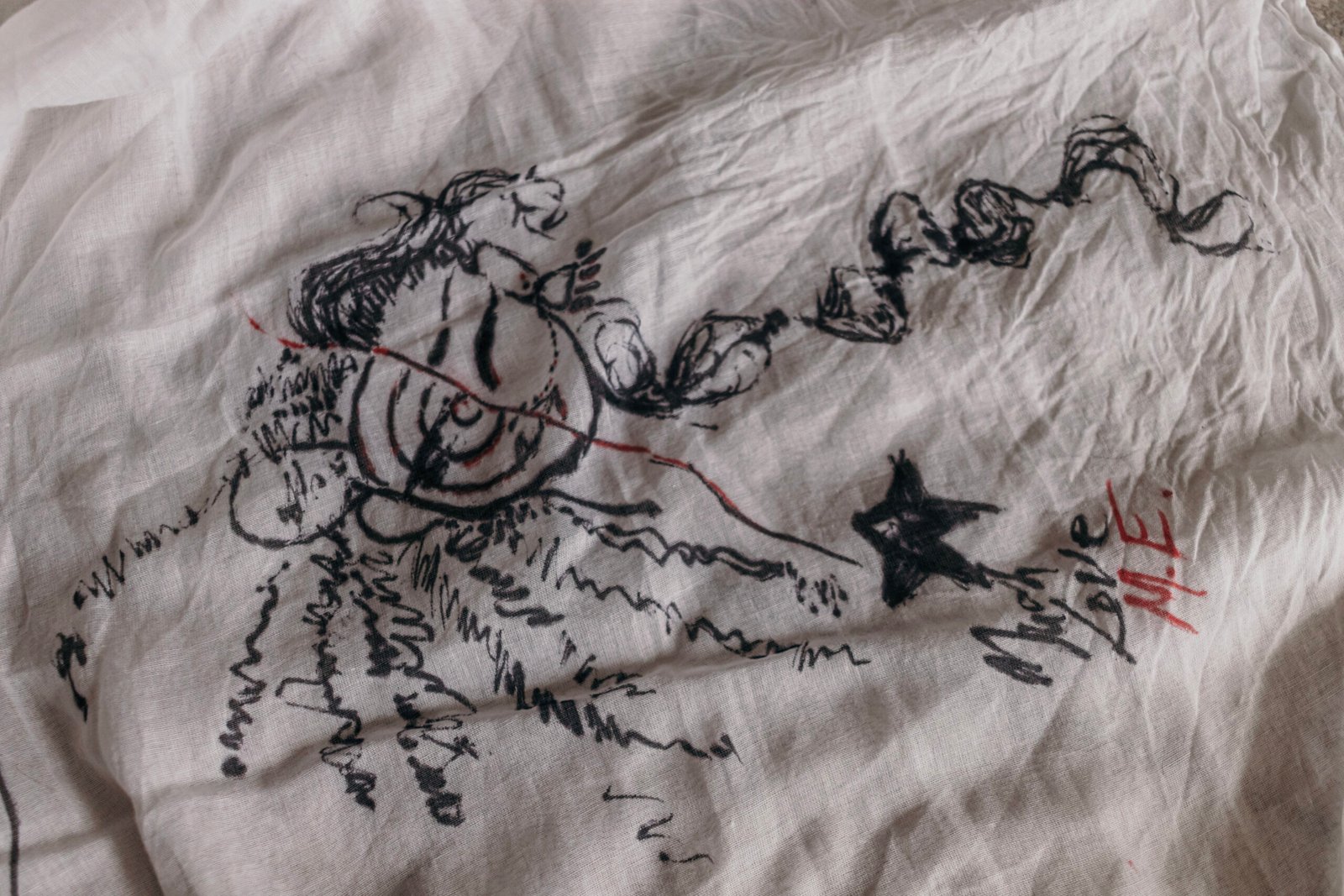
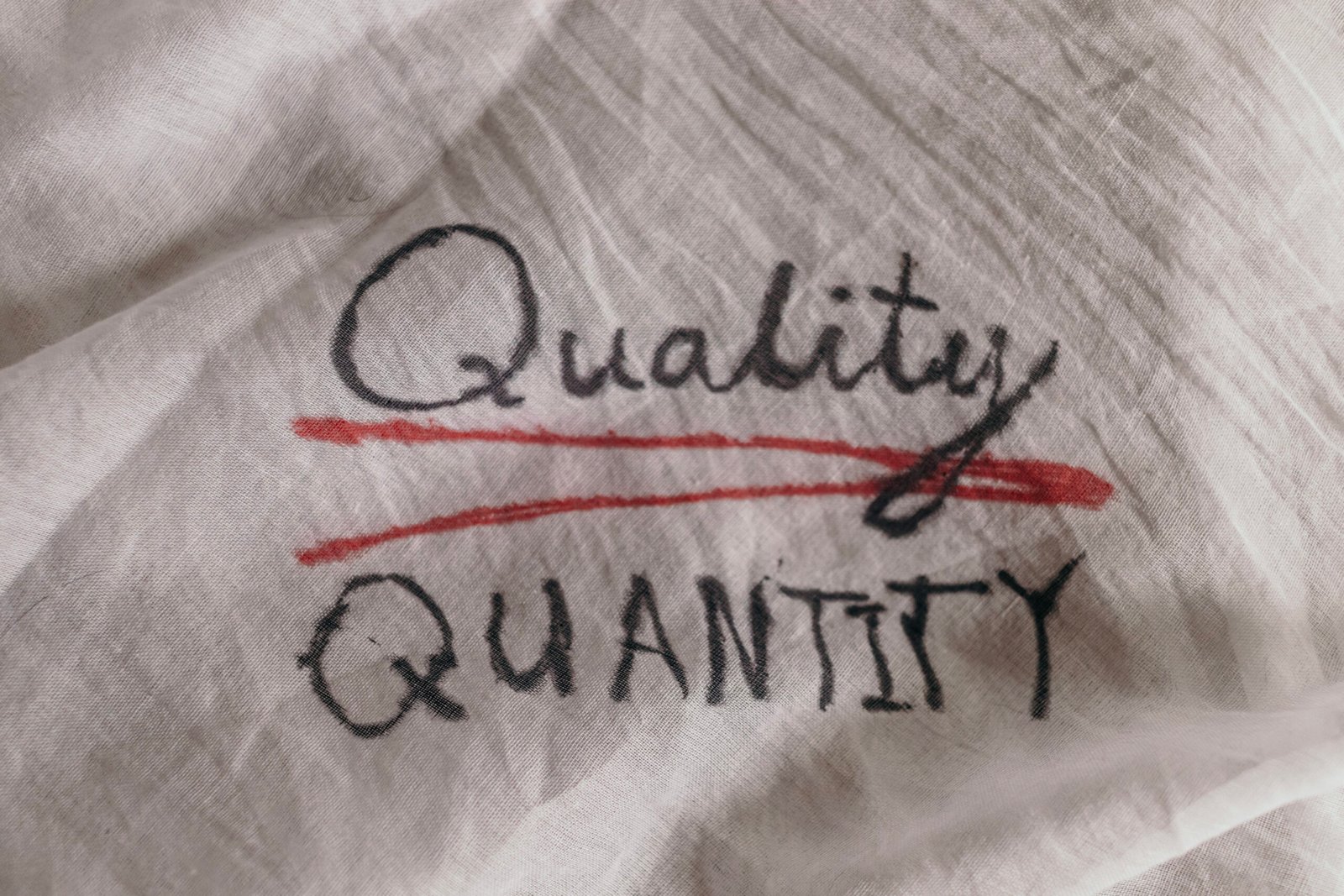
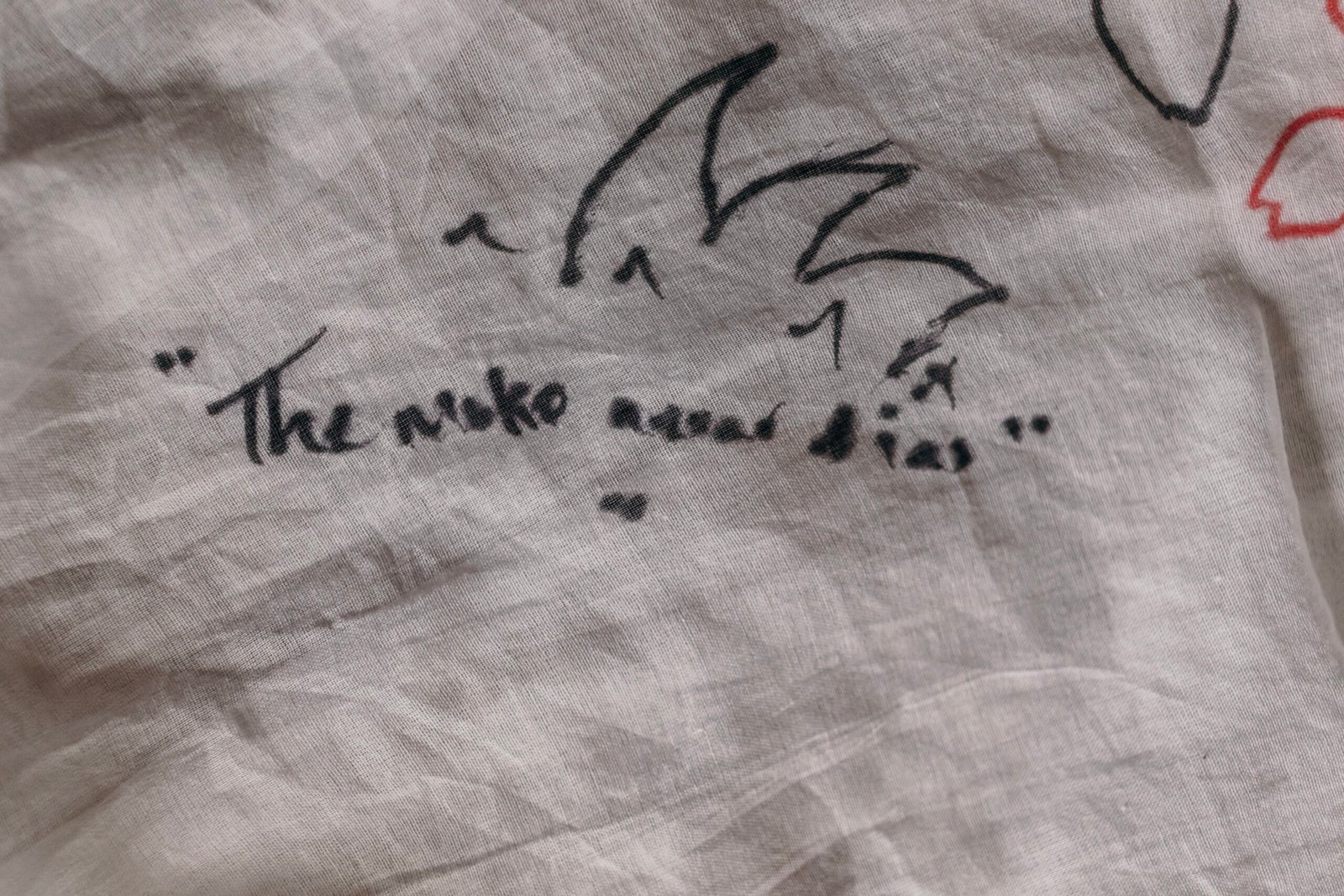
Curatorial + Experience Design
Critical Reflection
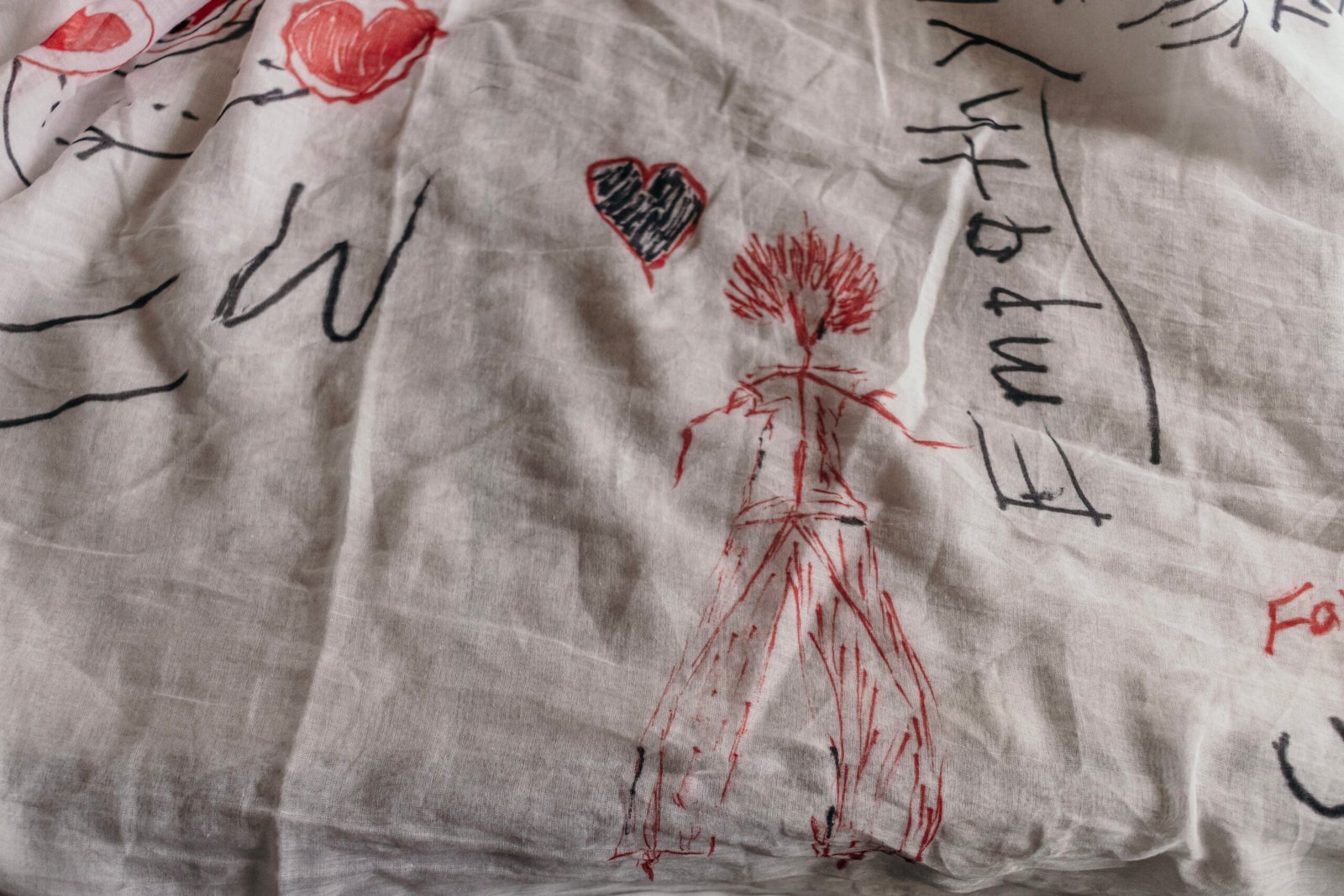
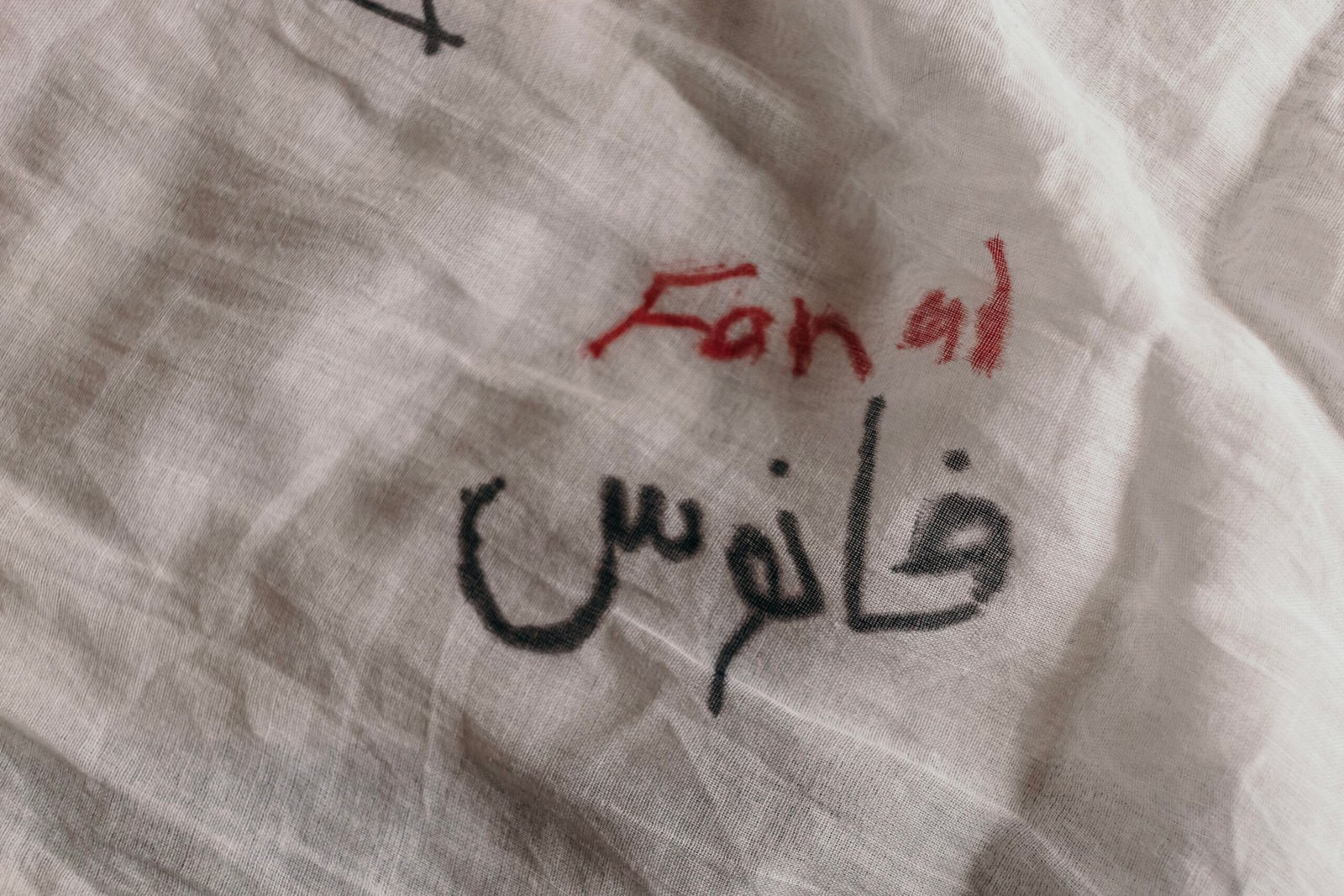
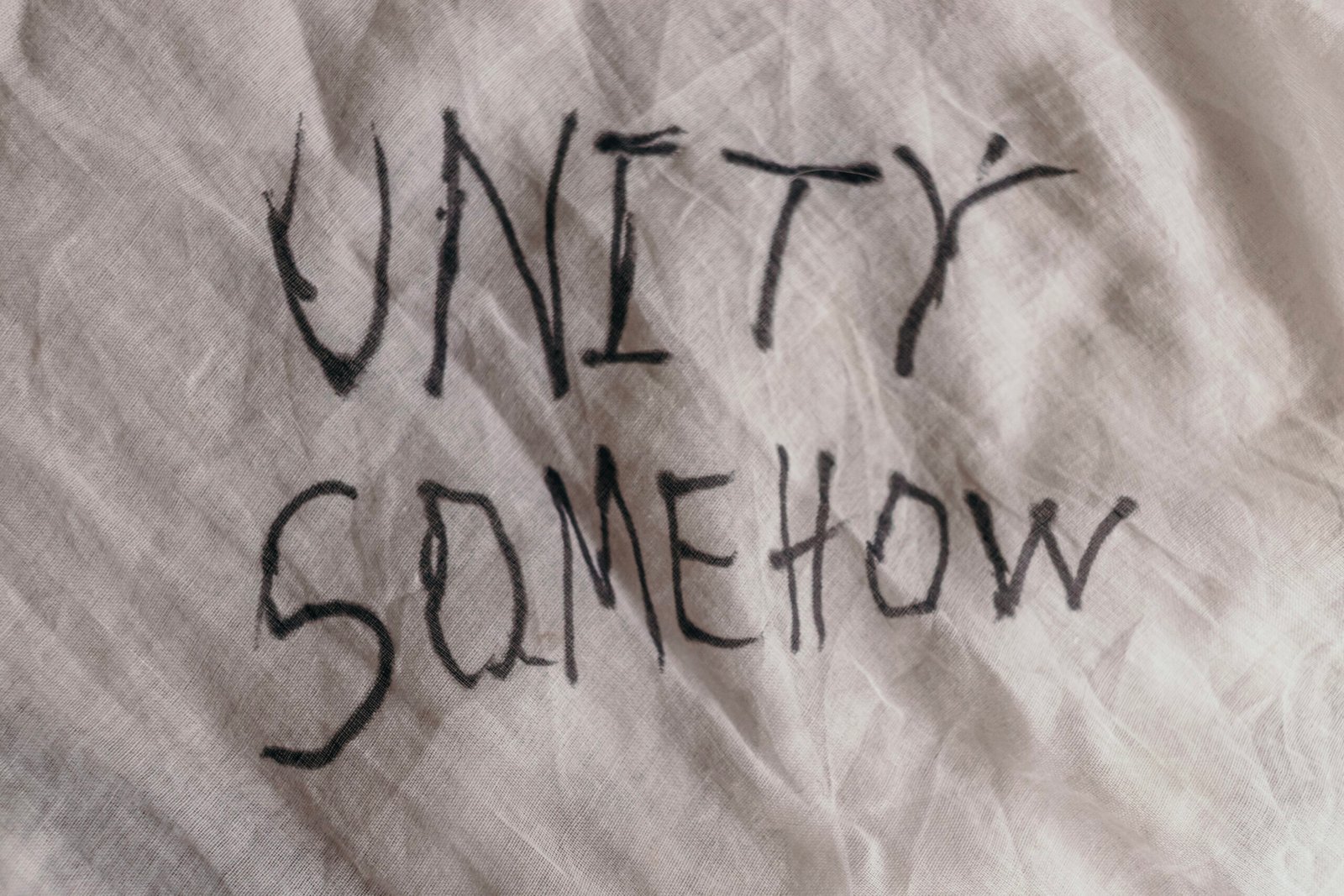
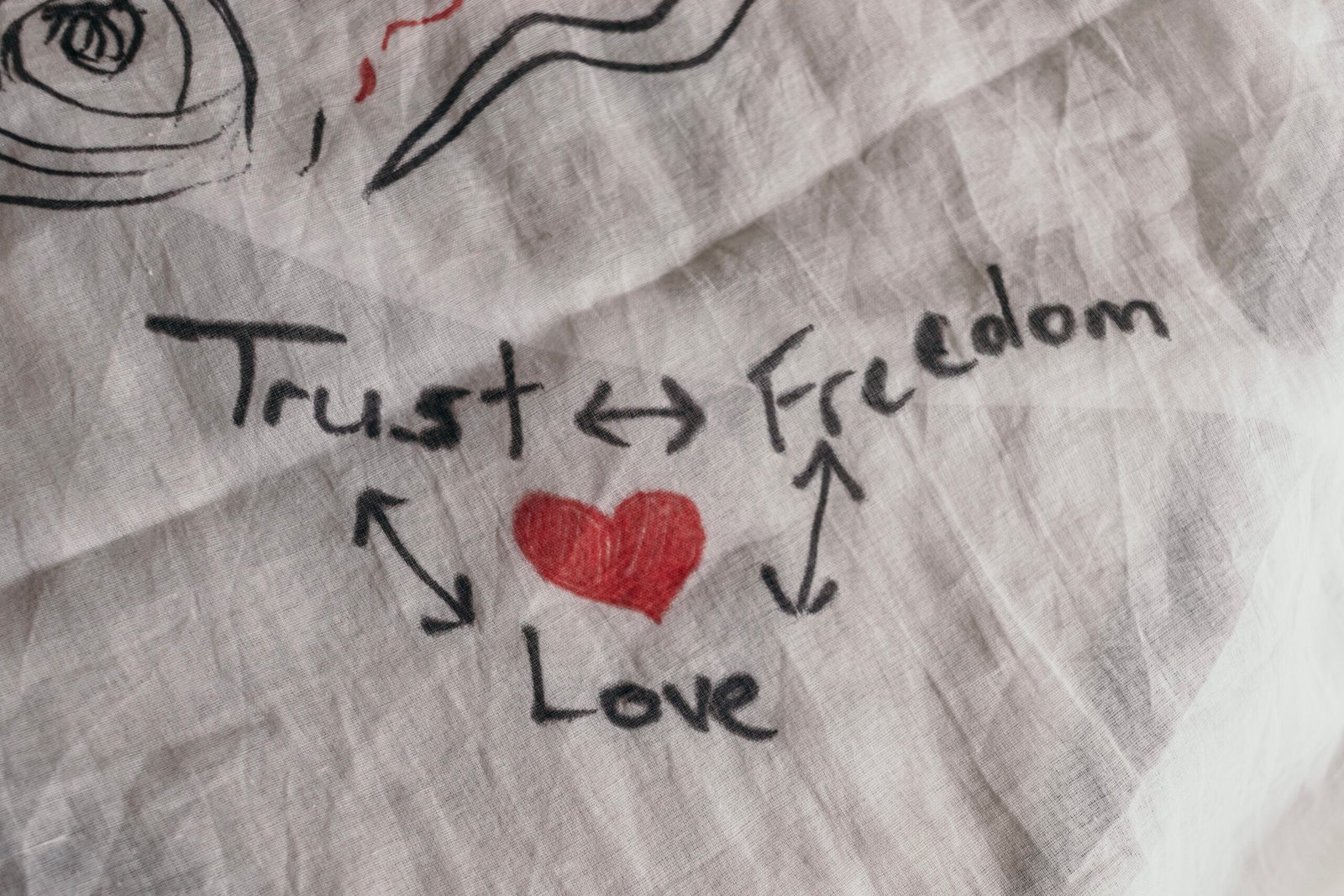
My early understanding of the gathering was that it would be a way of returning the work to the communities connected to it. However, as we curated the event, I learned that dissemination could become a research method in its own right, through which the work was expanded and reorganized. True to the Trinbagonian way, the gathering took on the logic of a gayap—the Karinya tradition of coming together to complete a massive task—as community members helped to make and sustain the event rather than simply attend it. Within that shared space, authorship was no longer held only by Adrian and me. Participants brought their own resources, stories, interpretations and modes of attention, producing forms of engagement that exceeded what we had designed or anticipated.
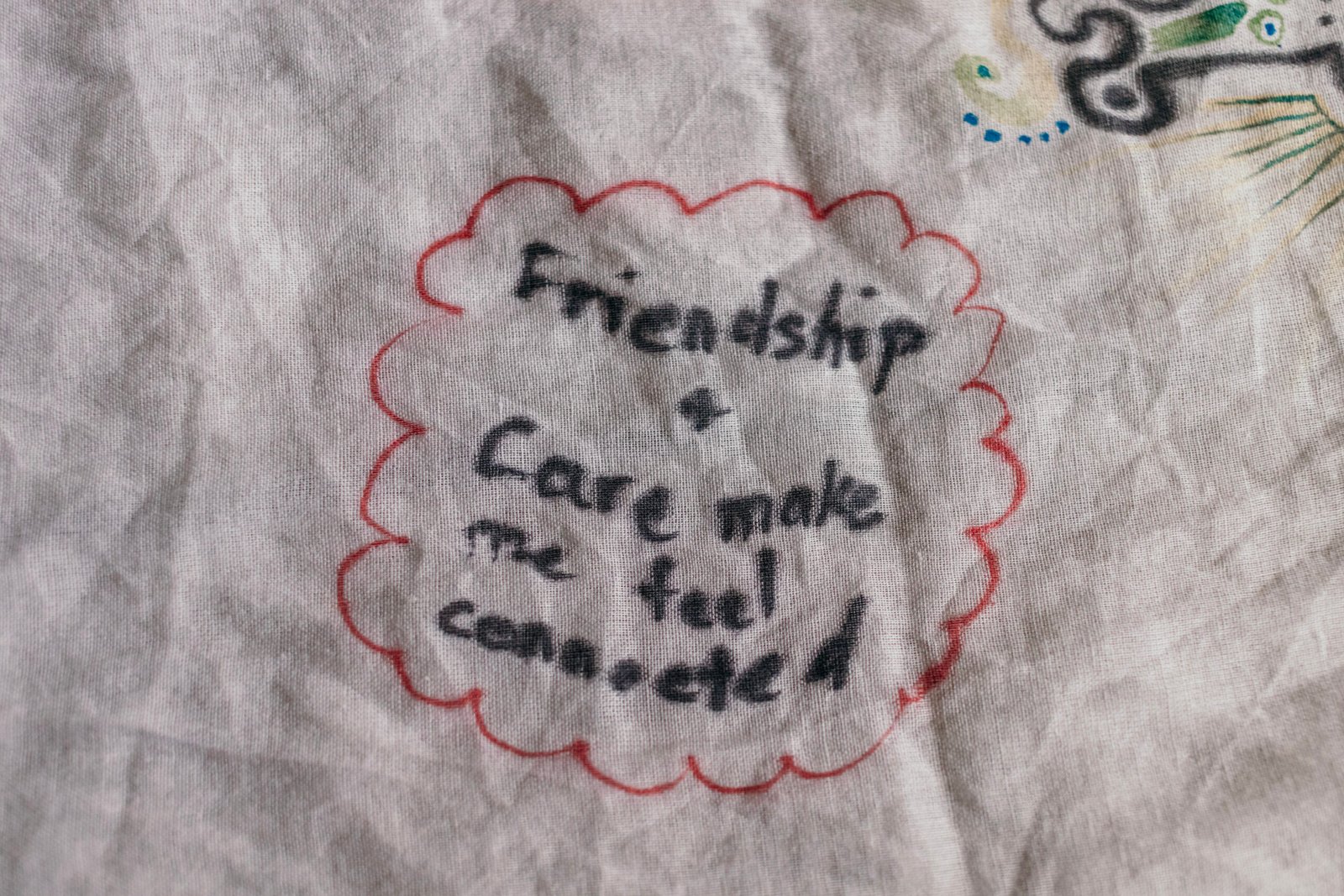
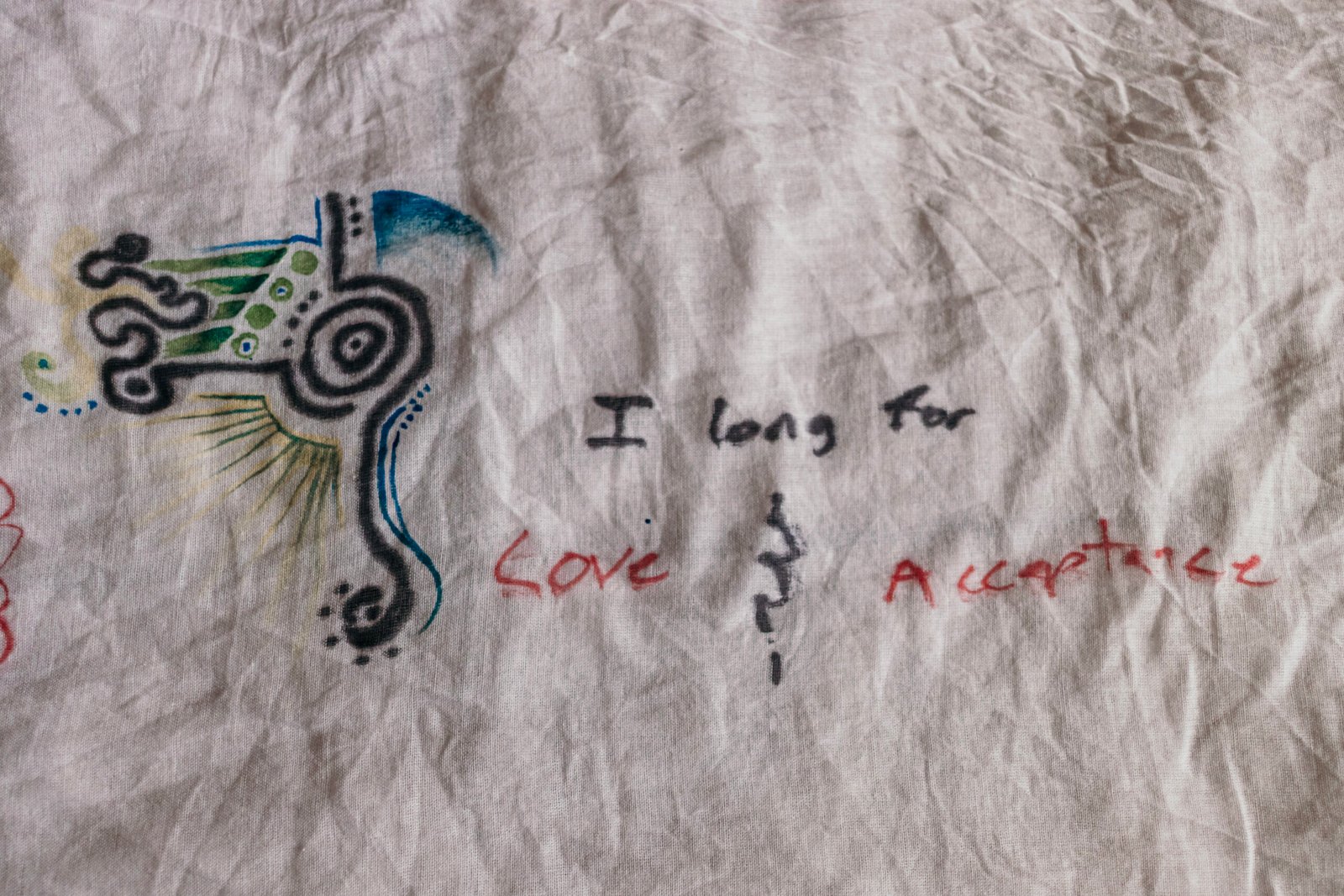
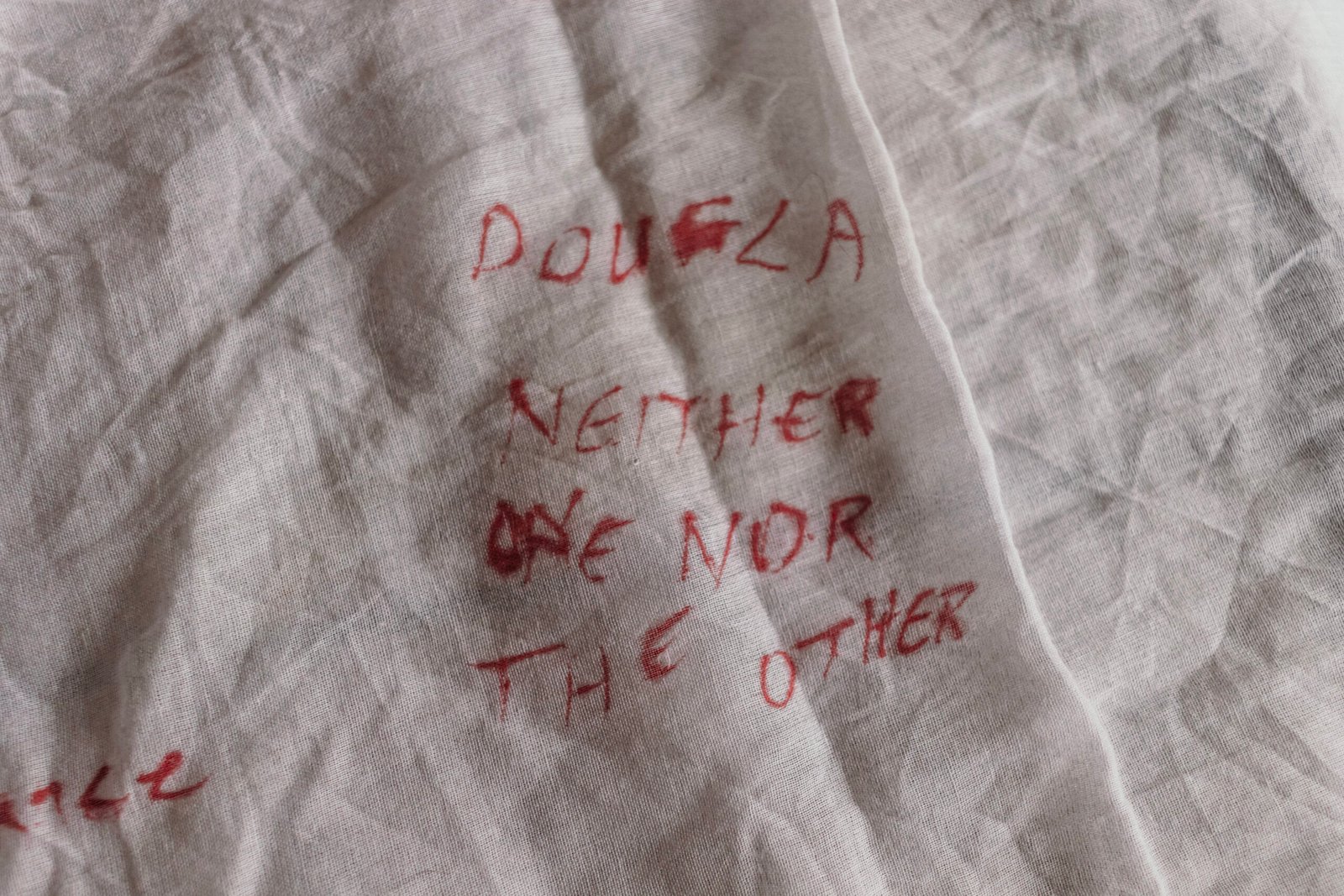
The event also required me to distinguish visible participation from evidence of transformation. A drawing, for example, showed that someone had engaged with the work, but could not fully disclose what they felt, or understood. I therefore had to separate what I observed from what I interpreted, resisting the temptation to treat engagement itself as proof that the methodology had achieved its aims. If anything, the gathering showed that knowledge and meaning could remain distributed without becoming equal or transparent, and that participation did not make them mine (the researcher) to possess.
Across every arc of this project was the significance of trust, and while trust itself cannot be guaranteed through design, offering several self-directed ways of entering the research, and protecting forms of participation that involved greater vulnerability, allowed people to determine their own proximity to the encounter. Understandably, these curatorial choices could support agency, but they could not ensure safety or predetermine what would emerge. adrienne maree brown’s understanding of facilitation as “holding change” helped me name the responsibility of creating structures capable of responding to the histories and dynamics already present, while relinquishing control over the meanings produced within it (brown, 2021).
As the doors closed and the gathering drifted into a pavement lime, I came to understand the event as an ethical and relational practice of making conditions possible, remaining attentive to what develops, and accepting that the research will change when it enters the hearts of others.
For practice-as-research excerpts, documentation from the public sharing, a brief note on its curation and the accompanying zine translating our insights into an accessible form, click here.
LUVEMBA
The returning phase, in which the project gathers its residues: what was revealed, what is being released, and what now travels into the next cycle of practice.
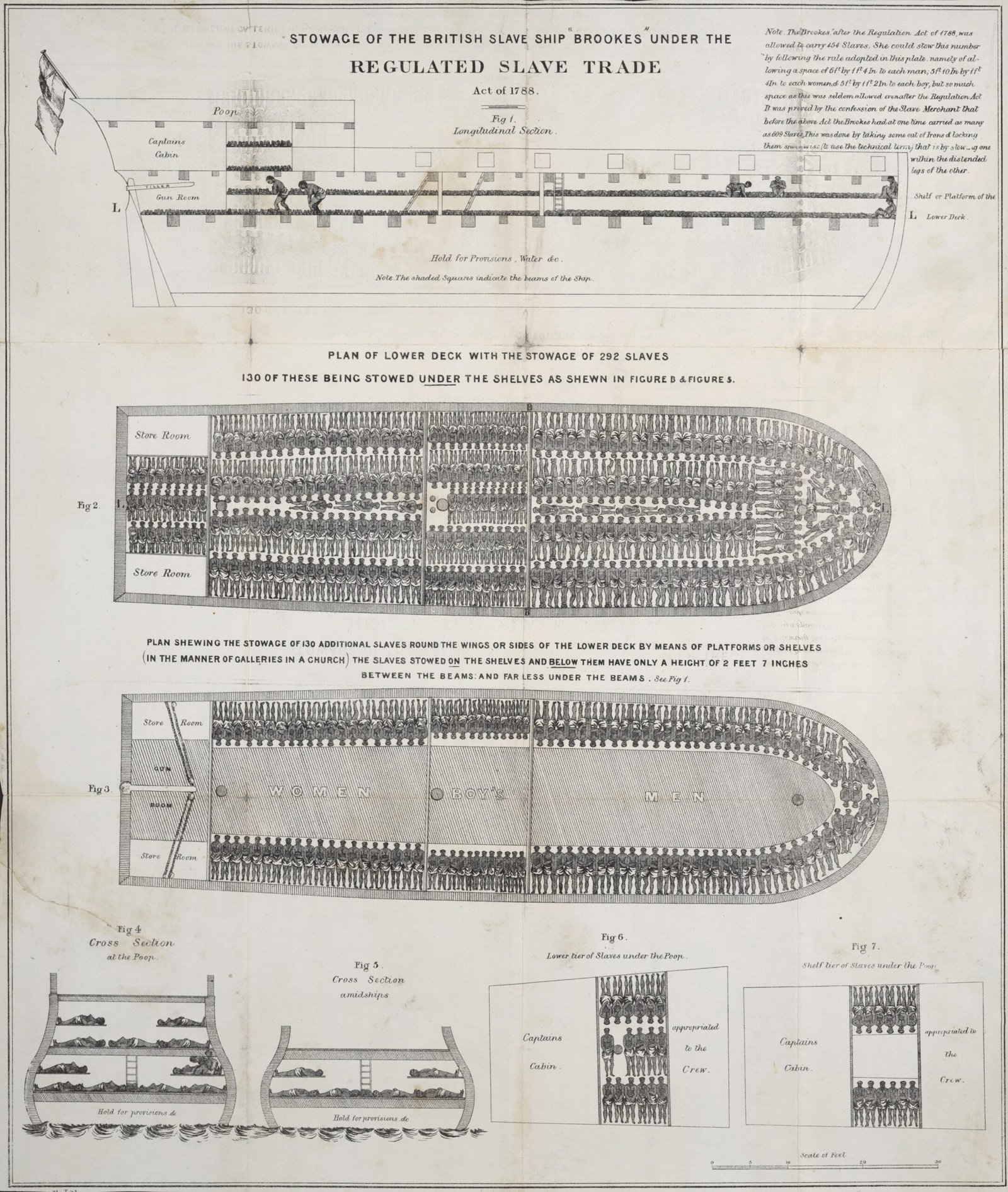
On Cuddling by Phanuel Antwi uses intimacy as a critical lens for thinking about how Black life is formed within, against and beyond structures of violence and domination. He refers to ship’s hold as a liminal space where Black bodies were violently forced into relation through slavery and colonial extraction, while also attending to the intimate, bodily practices that emerged within and against those conditions (Antwi, 2022).
Here, I draw on his term counter-holding to think about how this phenomenon continues within Trinbago’s social world which was constructed by forced proximity without intimacy. What it might mean to practice another kind of holding amongst the archipelagic bodies held together by uneven crossings, and unequal histories and distances of violent displacement.
In this project, counter-holding moves across three crosscurrents. It begins inside my own creolized body then extends towards another body, where their own histories meet mine. It finally expands into community, where the knowledge generated through that encounter is carried into shared space and opened to collective interpretation. Across all three, relation remains a practice of ongoing negotiation: a practice of counter-holding.
As this work enters public discourse in a racially and politically fraught society, it cannot be overstated that there can be no reconciliation or equivalence between the violence and trauma produced by slavery and indentureship.
What this work offers is perhaps more difficult: a way of thinking about relation that does not require us to equate our suffering, nor to surrender parts of ourselves in order to become whole. How might we remain with one another—not through the dissolution of our differences, but because of them?
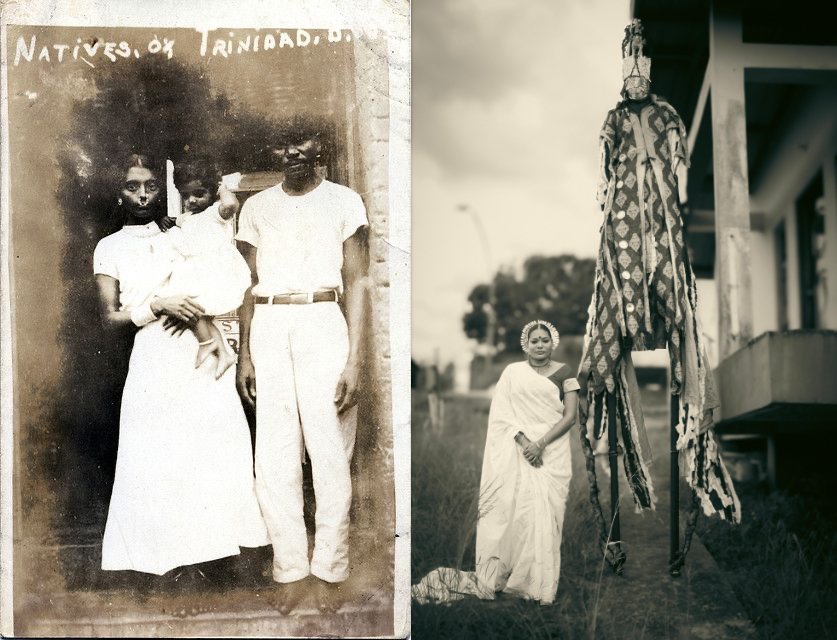
- Labelled simply as “Natives of Trinidad” this rare portrait taken in the late 19th Century, shows an Indian woman cohabiting with an African man. Credit unknown.
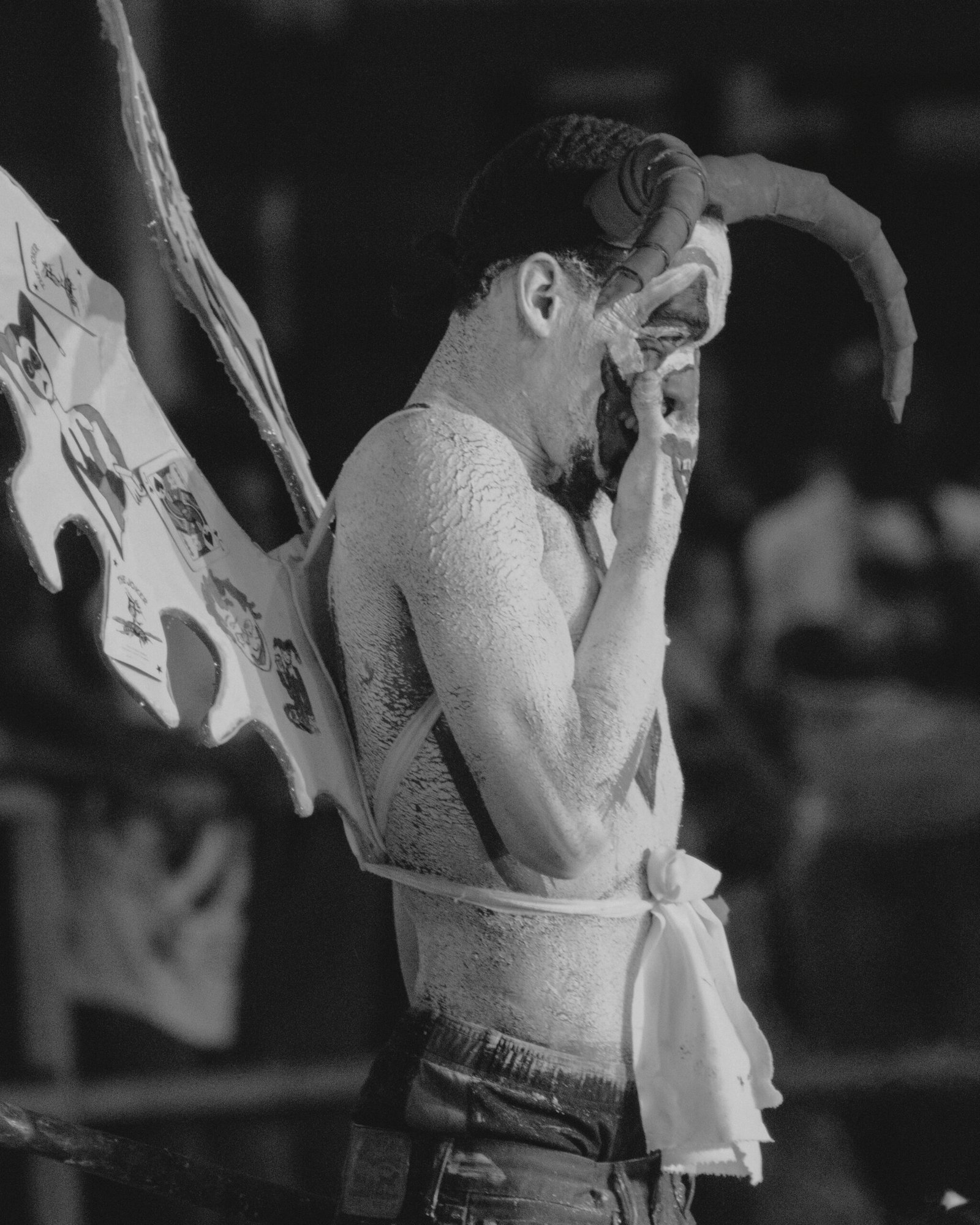
- Dougla Gothic, a photographic essay for this project taken by Jerel Ramsey.
A Dougla in the undercommons
Harney and Moten’s undercommons names a fugitive space for Black scholars within but not of the university, where those the institution cannot fully contain study, make relation and survive otherwise (Harney and Moten, 2013). I locate my douglaness there, in academia’s underbelly, where the inheritances in my body exceed the boundaries of any single discipline and limbos in the spaces between them.
I return here, briefly, to my own struggle to connect with Odissi when I neither think nor speak in Sanskrit or Odia. Being a dougla academic means more than adding different histories to existing academic categories; it also means questioning the standards through which knowledge, participation and embodied wisdom are generated and recognized.
The labour of cultural translation in this project involved articulating the ancestral, spiritual and communal significance of Moko Jumbie within institutional language that could not fully express those meanings. Recognizing Afro-Caribbean movement traditions as expressions of the Black sacred and as community practices in their own right—not simply as material for artistic collaboration—became central to my understanding of how Black performance can be unintentionally festivalized and spectacularized when encountered through institutional frameworks unfamiliar with its contexts. Addressing this in his concept of “opacity”, Glissant articulates the right of people and cultures not to be rendered fully legible to others. He stresses that Caribbean ways of knowing and being do not always sit comfortably within spaces organized around singular origins and transparent meaning, and calls for cultural difference to be respected without first being translated into terms outsiders can fully understand (Glissant, 1997).
Added to this, my understanding of liming and ole talk as legitimate research methodologies and social technologies activated within the public gathering reoriented my understanding of evidence. They showed how research could be critically engaged with and collectively remade through Trinbagonian forms of sociality, rather than rendered legible only through the institutional metrics by which participation, knowledge and learning are often assessed (Fernández Santana et al., 2019).
Recognizing and holding space for plural ontologies in my Odissi body is at the core of this project. Harney and Moten unravels this as more than the inclusion of ‘other’ ways of knowing, naming a collective intellectual life made within the institution without seeking legitimacy on its terms (Harney and Moten, 2013). The under-theorization of dougla embodiment in Indian classical dance gives this idea practical resonance, requiring me to think within the gaps between disciplines that do not speak to each other and bridge knowledges into relation. I therefore take up the undercommons not only as a language for institutional misrecognition, but as a method for studying otherwise through the labor of bringing Odissi into sustained conversation with Indo-Black Caribbean thought.
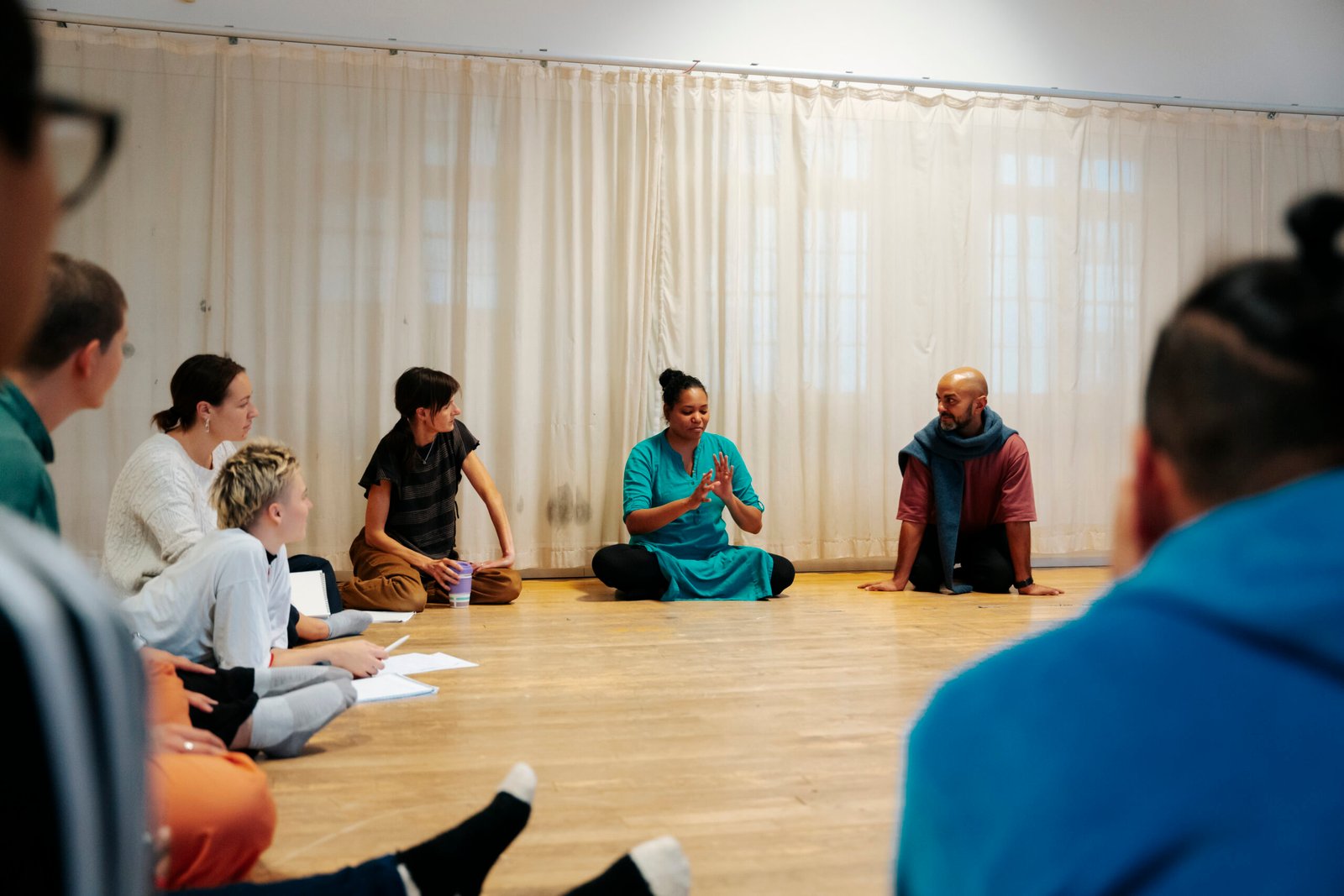
How Relational Practice Changed My Understanding of Technique
“Architectural space is born when the architect falls silent and allows matter, place, and light to speak. Then, and only then, beauty reveals itself” (El Elevador, n.d.).
Recently, I have been thinking about how dancing bodies trained into technical obedience become the institution’s living walls, reproducing its architectural boundaries through the flesh.
Before this project, I understood shifts in my technique as my Caribbean embodiment becoming more visible. But I wondered if these inheritances had always shaped my dancing, why had I not felt or recognized them in the same way during years of training?
The answer hinged on distinguishing between Caribbean embodiment and the ways my Odissi body had been disciplined. I needed to understand the conditions under which different embodied capacities become available to shape my movement.
Dancing with a Moko Jumbie did not awaken a sleeping Caribbean body, nor did it create a new kind of Odissi. It did, however, change the conditions through which I was dancing. With a stilt dancer, our movement mechanics were not instantaneously compatible. To dance together, rather than beside one another, we had to allow differences in height, timing, proximity and movement choice to shape each other’s decisions. This attunement altered aspects of our scale, quality, and use of space, while other elements of our respective forms remained stable. For Adrian, Odissi opened new possibilities for dancing on stilts as he translated my technical phrases through his own movement vocabulary. Our work showed me that technique could become relational when another body is allowed to participate in how movement is organized, rather than simply occupying the space beside it.
What then is meant by technique?
Rituparna Pal’s account of leaving a major Bharatanatyam institution gives some clarity. Under different pedagogical conditions, she did not invent another form but began to inhabit Bharatanatyam differently (Pal, 2023). While our experiences are not identical, her reflection affirmed my growing sense that pedagogy shapes the kind of body through which technique is experienced and performed.
Performances of Spiral Time explains why technique is never repeated identically (Martins, 2021). But neither is its variation unlimited. Training organizes the field of possible variation, while relational encounters can reorganize that field.
To question technique, then, is not necessarily to betray it. The more pressing question is: who is authorized to define it in the name of tradition?
Christopher B. Zeichmann’s Radical Antiquity gives this question a sharp political dimension. Zeichmann shows how communities at the margins of state power adopted and reworked existing social and political forms, at once resembling and contesting the dominant orders around them. Their relationship to these forms was neither one of preservation nor total refusal; they reshaped what was available in response to their own needs and social conditions (Zeichmann, 2025, pp. 20–22).
Understandably, Zeichmann is not writing about dance, but his argument helps me resist a false choice between fidelity and rejection. A codified dance may continue precisely because it is questioned and made answerable to those historically excluded from its authority. And this is particularly important within the socio-cultural politics of Odissi.
As I continue to reflect on my relationship with Odissi, I have come to understand that I can love a complicated dance form while remaining accountable to its complexities, without entering the wormhole of trying to make the relationship “right.”
On another note, much of life has been spent trying to solve the neocolonial arithmetic that asks culture be made legible through equal representation from mixed bodies. My use of the Dikenga in this workbook, for example, does not displace my Indianness. It is inspired from a deeply personal reclamation of Blackness, one I understand in conversation with Négritude, the anti-colonial literary and political movement that emerged in the 1930s by Aimé Césaire, Léopold Sédar Senghor and Léon-Gontran Damas as a reclaimed language of Black self-affirmation (Rabaka, 2015; Diagne, 2023). Being raised in an Indo-Caribbean household and alienated from my father’s family for much of my life, returning to that part of myself has been significant in my Odissi practice, and an embodied process of recognizing personal histories that were always present, though never equally acknowledged.
Based on the learnings of this project, I leave with an understanding of technique as an evolving system of embodied relationships between body, ancestrality, temporality, pedagogy, environment and the conditions of practice.
Behaving disobediently within and across Odissi technique, I am moving towards performance as research with a particular interest in the exploration of Caribbean bodies as sites of embodied theorization: asking how our movement practices may generate new knowledge about technique, relation and worldmaking.
Rather than inserting Caribbean histories into codified forms as cultural content, I want to understand how dancing Caribbean bodies might conjure plural ontologies that become the ground from which those forms are inhabited and remade against the walls of oppressive structures. This includes speculative, archipelagic choreographies that ask how bodies shaped by different histories might share a world in all their differences and fractures.
Above all, I am less interested in achieving visible cultural balance in my work and more concerned with creating conditions in which my inheritances—ancestral or otherwise—can remain active without being forced to compete for recognition.
As a child, I believed the ocean was a place where things disappeared.
This MA has been a journey of learning to tread the waters of contradiction without drowning in them, marked in large part by my frantic attempts to keep things from disappearing: choosing one thing over another, then panicking as what I had not chosen receded.
To learn to swim is to learn that staying afloat comes from softening your rigid limbs into the ocean’s curves and folds. And as my first residency taught me, this requires courage.
In learning to dance with courage, I understand now that the ocean was never only a place where things disappeared. It was also a place where fragments made worlds that had not existed before, and where new languages and possibilities were born.
Some things survive simply because they refuse to be made whole. Some things ask only that we be brave enough to live in their currents.
Musoni
This is the story of a woman who learned to love the ocean—and of an ocean that loved her back.